
 Kontakt
 Jak kupować
Dostawa
Doradca ds. zakupów
Jewish Apocalypticism
 Angielski
 47 b
47 b
Klienci kupili także





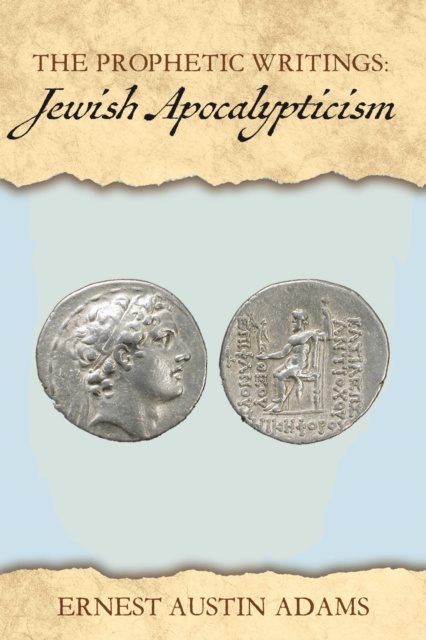
We show how Jewish Apocalypticism developed from the time of the captivity of the Northern Kingdom by the Assyrians and how that the prophet Amos, c., 760 BC, took a bona fide prophecy concerning the crucifixion of Messiah (Amos 8:7-10), and coupled this with his expectation of an attack by the Assyrians. The attack occurred c., 722 BC, mainly as a result of the refusal of the Israelites to pay tribute to the Assyrians. In that same prophecy, Amos foretold of an impending great tribulation when there would be an earthquake and the day would be dark from noon and the houses and sanctuaries would be laid waste and that the Lord would return to earth on that day (Day of the Lord) to judge the idolatrous Israelites and the enemies of Israel. Because the Lord did not return at that time and the expected signs and wonders in the sky and on earth did not occur, these expectations were pushed out to a later time. We show how Amos' expectations became the apocalyptic prototype for subsequent apocalyptic writers. We show how apocalypticism was largely birthed out of nationalistic ideals to secure what they regarded as "e;their"e; Land and wanted to see their enemies punished. Their apocalyptic expectations gained momentum, and they started to picture God returning to dwell in their Temple to rule the world from Jerusalem. Solomon, when dedicating the temple, was in no doubt that their Temple could not contain God and that He lived in His abode in heaven (1 Kings 8:26-30). We detail the many issues related to Jewish apocalypticism: Ezekiel was dysfunctional, i.e., had to be restrained with ropes, was mute at times, could not shed a tear when his wife died, and had visions of events which never materialized. These are all signs of someone suffering from schizophrenia. The first scroll of Ezekiel was edited by the school of the prophets and these prophets wrote second Ezekiel which was combined into one book after the time of Josephus. The Book of Enoch, which was eventually rejected by the Christian leaders in the fourth century AD, due to many contradictions, was written by Jewish priests from the time of their Babylonian captivity. It is shown how many of the apocalyptic depictions in Enoch were gleaned from Zoroastrian and Sumerian mythology which impacted on their apocalyptic views going forward, and were later included in the text of Daniel and Revelation. Daniel, was written over time by at least three writers, and was initially written as a parabolic depiction of folk-tales to encourage the Israelites who were facing a time of crisis. During the time of Antiochus iv Epiphanes, ex post facto prophecies were added and again, during the early second century AD. These additions were mainly sourced from the Book of Enoch by Aquila of Sinope, who was excommunicated from the church for refusing to turn his back on practicing astrology. None of Aquila's additions are found in the Dead Sea Scroll fragments, c., 70 AD, nor were they mentioned by Josephus who wrote extensively on Daniel, nor were they mentioned in New Testament epistles. An ancient copy of Daniel belonging to the Dead Sea Scroll collection, was handed to CIA operative Miles Copeland in Damascus in 1947 and, after photographing the scroll, it was sent to the CIA headquarters after which it never saw the light of day. We show convincingly that Aquila of Sinope wrote The Revelation of John, naming it after a notable character as was the custom with the apocalyptic genre. We reveal the sources of Revelation and show convincingly how this work was orchestrated from prior apocalyptic works and that this work is not prophecy from God. Evidence from writings produced in the early second millennium AD shows that Aquila was the writer of Revelation. The early Jerusalem church was enamored with Jewish apocalypticism and took certain apocalyptic portrayals from the Assumption of Moses and the Book of Enoch and added apocalyptic clichs to the words of Messiah.


Informacje o książce
Angielski

Podaruj tę książkę jeszcze dziś
To łatwe
1 Dodaj książkę do koszyka i wybierz „dostarczyć jako prezent” 2 W odpowiedzi wyślemy Ci bon 3 Książka dotrze na adres obdarowanegoCześć! Jestem Libroamiko, Twój doradca książkowy.
Jak mogę Ci pomóc?