
 Kontakt
 Jak kupować
Dostawa
Doradca ds. zakupów
Living with the Flood
Mesolithic to post-medieval archaeological remains at Mill Lane, Sawston, Cambridgeshire - a wetland/dryland interface
 Angielski
 38 b
38 b
Klienci kupili także



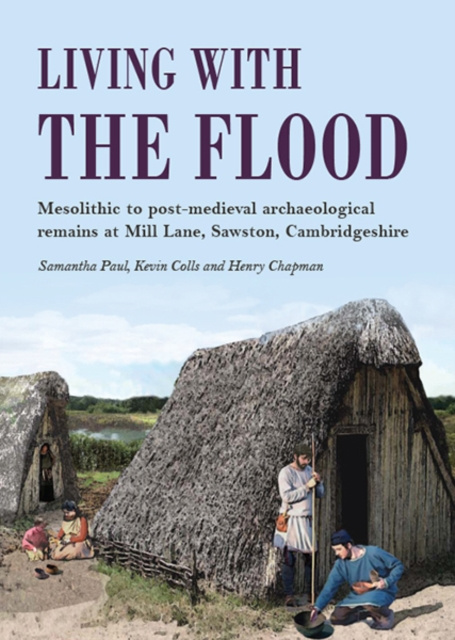
The site at Mill Lane, Sawston, represents millennia of human activity within a dynamic and changing landscape setting. River valleys have been a focus for human activity since the early Holocene and, in addition to providing abundant archaeological evidence for this activity, the proximity to water also highlights the potential for the preservation of both archaeological remains and palaeoenvironmental source material. However, human activity within river valleys also commonly bridges areas of both wetland and dryland; ecological zones which are often approached using quite different archaeological methods and which present considerable differences in levels of archaeological visibility and preservation. The site at Mill Lane offered an uncommon opportunity to explore the interface between these two types of environment.Here we present the results of the study of a wetland/dryland interface on the edge of palaeochannels of the River Cam in Cambridgeshire. Through the integrated archaeological and palaeoenvironmental analysis of a site on the western edge of Sawston, a detailed picture of life on the edge of the floodplain from the late glacial to the post-medieval periods has been developed. At the heart of this is the relationship between people and their changing environment, which reveals a shifting pattern of ritual, occupation and more transitory activity as the riparian landscape in a wooded setting became a wetland within a more openly grazed environment. The presence of potential built structures dating to the early Neolithic, the early Bronze Age and the early Anglo-Saxon periods provides some sense of continuity, although the nature of these structures and the environmental context within which they were constructed was very different.The site at Mill Lane, Sawston, represents millennia of human activity within a dynamic and changing landscape setting. River valleys have been a focus for human activity since the early Holocene and, in addition to providing abundant archaeological evidence for this activity, the proximity to water also highlights the potential for the preservation of both archaeological remains and palaeoenvironmental source material. However, human activity within river valleys also commonly bridges areas of both wetland and dryland; ecological zones which are often approached using quite different archaeological methods and which present considerable differences in levels of archaeological visibility and preservation. The site at Mill Lane offered an uncommon opportunity to explore the interface between these two types of environment.Here we present the results of the study of a wetland/dryland interface on the edge of palaeochannels of the River Cam in Cambridgeshire. Through the integrated archaeological and palaeoenvironmental analysis of a site on the western edge of Sawston, a detailed picture of life on the edge of the floodplain from the late glacial to the post-medieval periods has been developed. At the heart of this is the relationship between people and their changing environment, which reveals a shifting pattern of ritual, occupation and more transitory activity as the riparian landscape in a wooded setting became a wetland within a more openly grazed environment. The presence of potential built structures dating to the early Neolithic, the early Bronze Age and the early Anglo-Saxon periods provides some sense of continuity, although the nature of these structures and the environmental context within which they were constructed was very different.The site at Mill Lane, Sawston, represents millennia of human activity within a dynamic and changing landscape setting. River valleys have been a focus for human activity since the early Holocene and, in addition to providing abundant archaeological evidence for this activity, the proximity to water also highlights the potential for the preservation of both archaeological remains and palaeoenvironmental source material. However, human activity within river valleys also commonly bridges areas of both wetland and dryland; ecological zones which are often approached using quite different archaeological methods and which present considerable differences in levels of archaeological visibility and preservation. The site at Mill Lane offered an uncommon opportunity to explore the interface between these two types of environment.Here we present the results of the study of a wetland/dryland interface on the edge of palaeochannels of the River Cam in Cambridgeshire. Through the integrated archaeological and palaeoenvironmental analysis of a site on the western edge of Sawston, a detailed picture of life on the edge of the floodplain from the late glacial to the post-medieval periods has been developed. At the heart of this is the relationship between people and their changing environment, which reveals a shifting pattern of ritual, occupation and more transitory activity as the riparian landscape in a wooded setting became a wetland w ...


Informacje o książce
Angielski

Podaruj tę książkę jeszcze dziś
To łatwe
1 Dodaj książkę do koszyka i wybierz „dostarczyć jako prezent” 2 W odpowiedzi wyślemy Ci bon 3 Książka dotrze na adres obdarowanegoMogłoby Cię także zainteresować

Cześć! Jestem Libroamiko, Twój doradca książkowy.
Jak mogę Ci pomóc?