
 Kontakt
 Jak kupować
Dostawa
Doradca ds. zakupów
 Angielski
 45 b
45 b
 Nowość
najlepszej
ceny ▸
Nawet do 30 dni na zwrot

What happens when a society strongly supports Islamic law, yet the outside world comes to associate that law with a single image: punishment?
For more than two decades, Aceh has occupied a unique position within Indonesia. It is the country's only province with extensive authority to implement Islamic sharia through its own legal institutions, provincial legislation, courts, administrative bodies, and enforcement mechanisms. Yet despite deep popular attachment to Islam and substantial public support for sharia, the image of its implementation has increasingly been dominated by highly visible symbols of enforcement-especially public caning.
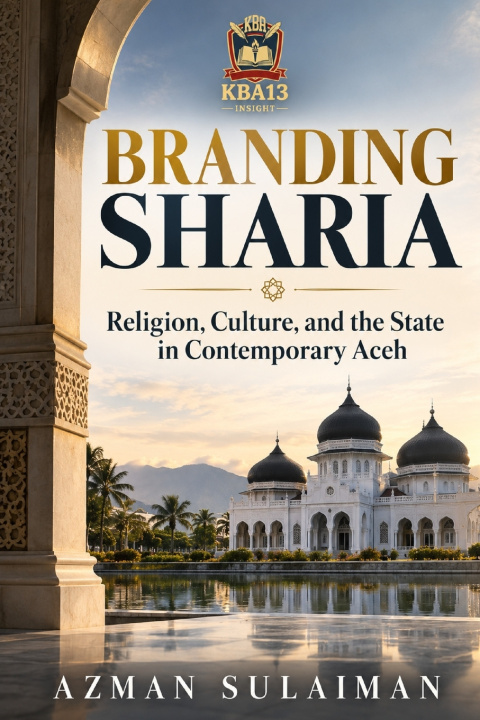
Branding Sharia: Religion, Culture, and the State in Contemporary Aceh asks why.
Drawing on original doctoral research, a survey of 400 respondents, interviews with twenty-six Acehnese participants, institutional analysis, and the author's own experience of living within the society he studies, Azman Sulaiman examines sharia not simply as a system of religious law but as a problem of public communication, institutional identity, cultural representation, and state governance.
The book traces the historical transformation of sharia from an element of Acehnese religious and cultural identity into a formal provincial legal order. It then examines how the state, religious institutions, local culture (adat), the media, and public perceptions interact in constructing the contemporary image of Islamic law.
At the heart of the book lies a striking paradox: strong public support for sharia can coexist with dissatisfaction over how sharia is represented and administered.
Sulaiman argues that the central problem is not simply whether Islamic law is supported or opposed. Rather, it is the distance between symbol and substance. When highly visible enforcement overshadows justice, welfare, education, ethical government, and social responsibility, a complex religious and moral order can become publicly reduced to its most dramatic symbols.
Bringing communication studies into conversation with social construction theory, impression management, stakeholder theory, Islamic legal and ethical concepts, and Acehnese cultural traditions, the book develops the concept of "branding sharia" as an analytical framework for understanding how religious governance acquires a public image.
It also investigates the role of national and international media, showing how a single highly visual event can outweigh less dramatic dimensions of religious governance in shaping public reputation.
But this is neither an argument against sharia nor an uncritical defense of its implementation. Written from within Acehnese society, the book asks a more demanding question: Can a government communicate and govern an Islamic legal order in a way that reflects the broader ethical purposes it claims to embody?
Branding Sharia will be valuable to readers interested in Islamic studies, Southeast Asian studies, religion and politics, political communication, public relations, Islamic law, legal pluralism, Indonesian studies, media studies, and the relationship between religion, culture, and the modern state.
This is ultimately a study of more than Aceh. It is an examination of what happens when religious ideals become state institutions-and when those institutions must communicate what they stand for to their own citizens and to the world.


Informacje o książce
Angielski

Podaruj tę książkę jeszcze dziś
To łatwe
1 Dodaj książkę do koszyka i wybierz „dostarczyć jako prezent” 2 W odpowiedzi wyślemy Ci bon 3 Książka dotrze na adres obdarowanegoCześć! Jestem Libroamiko, Twój doradca książkowy.
Jak mogę Ci pomóc?