
 Kontakt
 Jak kupować
Dostawa
Doradca ds. zakupów
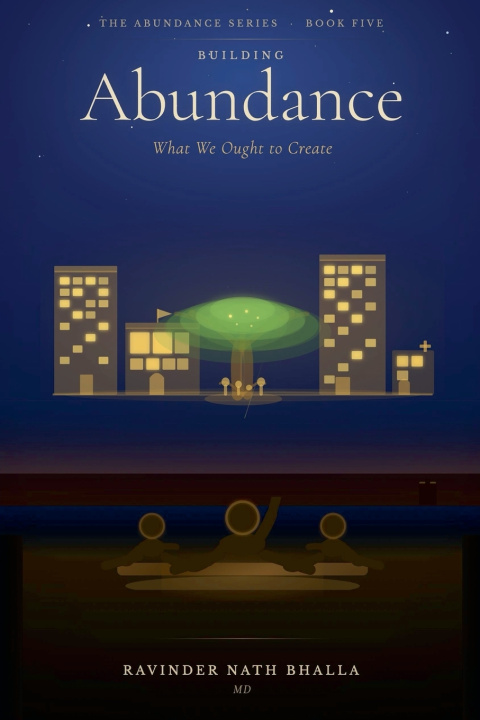
Building Abundance
 Angielski
 58 b
58 b
 Nowość
najlepszej
ceny ▸
Nawet do 30 dni na zwrot

"My brother and I used to sleep on the roof in summer because it was cooler there. My father would bring up a blanket and tell us the names of the stars. Now there is no roof. There is no father."
So begins Building Abundance - with five children, on five continents, telling the truth about the world adults built for them. A child in Gaza who knows what a dead person smells like. A child in Haiti whose father was taken twice. A nine-year-old in Chicago who has already identified the central question: somebody decided that is how it is. I want to know who decided.
Building Abundance is the answer to that question - and a blueprint for deciding differently.
Ravinder Nath Bhalla, MD is a psychiatrist and the medical director of a nonprofit serving thousands of the severely mentally ill. Over thirty-four years of practice he has watched intelligent, sophisticated people make decisions that systematically produced suffering that was not necessary. This book is his clinical finding about why - and his evidence-based argument for what a world built from abundance rather than scarcity would actually look like.
Drawing on documented outcomes from housing policy, criminal justice reform, universal healthcare, foreign aid, and the economics of extreme inequality, Building Abundance makes the case that the blueprint already exists. It has been tested. It works. What stands between the world that is and the world that ought to be is not a shortage of resources, technology, or human capacity. It is a specific set of decisions, made by identifiable people operating from a scarcity orientation - the felt conviction that there is not enough to go around, that the child at the bottom of the system is the price of stability at the top.
The fifth volume in The Abundance Series, Building Abundance is at once the most personal and the most politically urgent. It weaves together Dr. Bhalla's own story - immigrating from India in 1982, navigating the American healthcare system for a son with severe autism and a wife with multiple sclerosis, surviving heart failure at the moment a stranger from a different world placed a pacemaker in his chest - with the policy argument that interdependence is not a sentiment but a documented fact.
This is not a book about what we cannot afford. It is a book about what we have already built, in every jurisdiction that chose to, and what it cost to leave it unbuilt everywhere else.


Informacje o książce
Angielski

Podaruj tę książkę jeszcze dziś
To łatwe
1 Dodaj książkę do koszyka i wybierz „dostarczyć jako prezent” 2 W odpowiedzi wyślemy Ci bon 3 Książka dotrze na adres obdarowanegoCześć! Jestem Libroamiko, Twój doradca książkowy.
Jak mogę Ci pomóc?