
 Kontakt
 Jak kupować
Dostawa
Doradca ds. zakupów
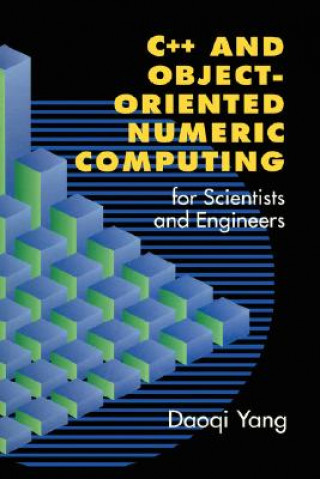
C++ and Object-Oriented Numeric Computing for Scientists and Engineers
 Angielski
 219 b
219 b
Nawet do 30 dni na zwrot
Klienci kupili także














 /
/
 Miękka
 102.59
zł
102.59
zł


 /
Twarda
116.08
zł
/
Twarda
116.08
zł
 /
Miękka
75.31
zł
/
Miękka
75.31
zł



 /
Miękka
592.61
zł
/
Miękka
592.61
zł
 /
Miękka
71.32
zł
/
Miękka
71.32
zł

This new text/reference presents an accessible, concise, but rather complete, introduction to the C++ programming language with special emphasis on object-oriented numeric computation for scientific and engineering program development. The description of the language is in compliance with ISO/ANSI standards and is platform independent for maximum versatility. Requiring only basic calculus and linear algebra as prerequisites, the book introduces concepts, techniques, and standard libraries of C++ in a manner that is easy to understand and uses such familiar examples as vectors, matrices, integrals, and complex numbers. It also contains an introduction to C++ programs for applications with many numeric methods that are fundamental to science and engineering computing: polynomial evaluation and interpolation; numeric integration; methods for solving nonlinear equations; systems of linear equations in full, band, an d sparse matrix storage formats and ordinary and partial differential equations. Numerous techniques and examples are provided on how to reduce (C and Fortran) run-time overhead and improve program efficiency.This new text/reference presents an accessible, concise, but rather complete, introduction to the C++ programming language with special emphasis on object-oriented numeric computation for scientific and engineering program development. The description of the language is in compliance with ISO/ANSI standards and is platform independent for maximum versatility.Requiring only basic calculus and linear algebra as prerequisites, the book introduces concepts, techniques, and standard libraries of C++ in a manner that is easy to understand and uses such familiar examples as vectors, matrices, integrals, and complex numbers. It also contains an introduction to C++ programs for applications with many numeric methods that are fundamental to science and engineering computing: polynomial evaluation and interpolation; numeric integration; methods for solving nonlinear equations; systems of linear equations in full, band, and sparse matrix storage formats; and ordinary and partial differential equations. Numerous techniques and examples are provided on how to reduce (C and Fortran) run-time overhead and improve program efficiency.


Informacje o książce
Angielski
Kategoria

Podaruj tę książkę jeszcze dziś
To łatwe
1 Dodaj książkę do koszyka i wybierz „dostarczyć jako prezent” 2 W odpowiedzi wyślemy Ci bon 3 Książka dotrze na adres obdarowanegoMogłoby Cię także zainteresować

 /
Twarda
165.14
zł
/
Twarda
165.14
zł


 /
Miękka
67.95
zł
/
Miękka
67.95
zł

















 /
Miękka
46.90
zł
/
Miękka
46.90
zł

Cześć! Jestem Libroamiko, Twój doradca książkowy.
Jak mogę Ci pomóc?