
 Kontakt
 Jak kupować
Dostawa
Doradca ds. zakupów
Circuit Analysis
 Angielski
 148 b
148 b
Nawet do 30 dni na zwrot
Klienci kupili także



 /
/
 Miękka
 68.44
zł
68.44
zł










 /
Miękka
104.53
zł
/
Miękka
104.53
zł

 /
Miękka
29.31
zł
/
Miękka
29.31
zł





 /
Miękka
146.40
zł
/
Miękka
146.40
zł



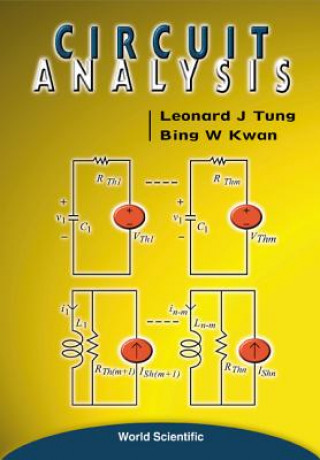
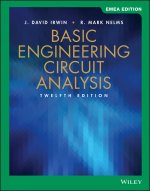
This volume is intended as a textbook for a first course in electrical engineering. It is divided into two parts, for a two-semester coverage. The first part deals with circuit elements, resistive circuits, circuit theorems, circuit topology, and the state-variable method. The presentation of the state-variable method is a special feature. The authors believe that the natural way to analyze RLC circuits is to use the state-variable method rather than second- or high-order ordinary differential equations. By choosing capacitor voltages and inductor currents in an RLC circuit as state variables, the so-called state equations can be systematically obtained through network topology. Of particular interest is the approach employing Thevenin's theorem and Norton's theorem to find state equations without using circuit topology. The second part of the book covers sinusoidal steady-state analysis, two-port networks, the Fourier series, the Fourier transform, and the Laplace transform. Great effort has been devoted to presenting the subjects of the Fourier series, the Fourier transform, and the Laplace transform with many practical circuits. Thus, the authors hope that the reader will be better motivated to learn rather abstract concepts such as complex frequency and frequency response.


Informacje o książce
Angielski

Podaruj tę książkę jeszcze dziś
To łatwe
1 Dodaj książkę do koszyka i wybierz „dostarczyć jako prezent” 2 W odpowiedzi wyślemy Ci bon 3 Książka dotrze na adres obdarowanegoMogłoby Cię także zainteresować
 /
Miękka
340.31
zł
/
Miękka
340.31
zł


 /
Miękka
120.82
zł
/
Miękka
120.82
zł
 /
Miękka
368.51
zł
/
Miękka
368.51
zł


 /
Twarda
162.15
zł
/
Twarda
162.15
zł








Cześć! Jestem Libroamiko, Twój doradca książkowy.
Jak mogę Ci pomóc?