
 Kontakt
 Jak kupować
Dostawa
Doradca ds. zakupów
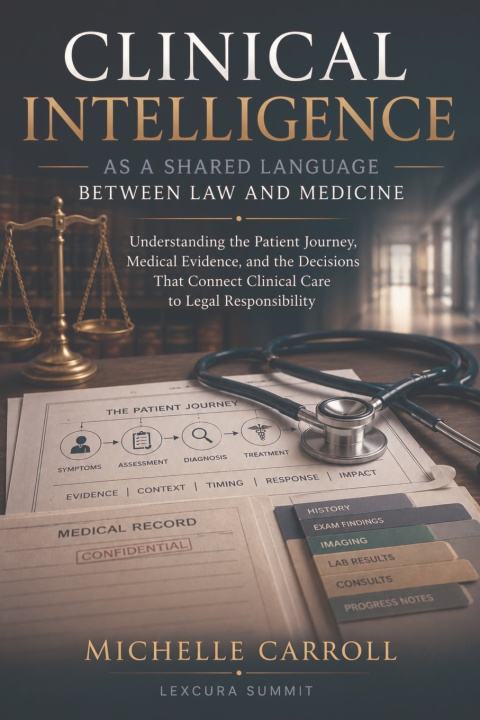
Clinical Intelligence as a Shared Language Between Law and Medicine
 Angielski
 105 b
105 b
 Nowość
Nawet do 30 dni na zwrot
Mogłoby Cię także zainteresować




 /
/
 Miękka
 246.58
zł
246.58
zł




Clinical Intelligence as a Shared Language Between Law and Medicine explores what happens when attorneys and clinicians examine the same medical case but approach it from entirely different professional perspectives.
A patient experiences one continuous journey. The evidence of that journey, however, is often divided across medical records, departments, healthcare systems, witnesses, policies, test results, imaging, and legal documents. By the time a case reaches litigation, the patient's story may have been reduced to thousands of disconnected pages that were never created to answer questions about negligence, causation, responsibility, or damages.
Michelle Carroll introduces Clinical Intelligence as a structured way to reconnect those fragments and help legal and clinical professionals understand the same patient without asking either profession to step beyond its proper role.
The book examines why medicine looks forward while care is still unfolding, but law looks backward after the outcome is known. It explains how hindsight can alter the apparent meaning of early symptoms, normal test results, provisional diagnoses, treatment decisions, clinical deterioration, documentation gaps, and missed opportunities for intervention.
Through practical discussion and realistic case reasoning, readers are guided through the essential elements of a reliable medical-legal review, including:
- the integrity and completeness of the medical record
- the patient's baseline condition and pre-existing health
- imaging and other objective clinical evidence
- the timing and recognizability of deterioration
- professional duties and clinical judgment
- regulatory and institutional responsibility
- causation, competing causes, and outcome impact
- the difference between a concerning event and a legally supportable conclusion
Clinical Intelligence does not replace attorneys, clinicians, or qualified expert witnesses. It provides a shared framework that allows each professional to contribute their own expertise while working from the same reconstructed patient journey.
Written for attorneys, clinicians, medical experts, legal nurse consultants, claims professionals, risk managers, and others involved in medically complex disputes, this book offers a fair and disciplined method for understanding what the evidence shows, what it does not show, and what must still be answered before responsible litigation decisions can be made.
At its center is one principle: law and medicine do not need to become one profession, but they do need a reliable way to understand the same patient.


Informacje o książce
Angielski
