
 Kontakt
 Jak kupować
Dostawa
Doradca ds. zakupów
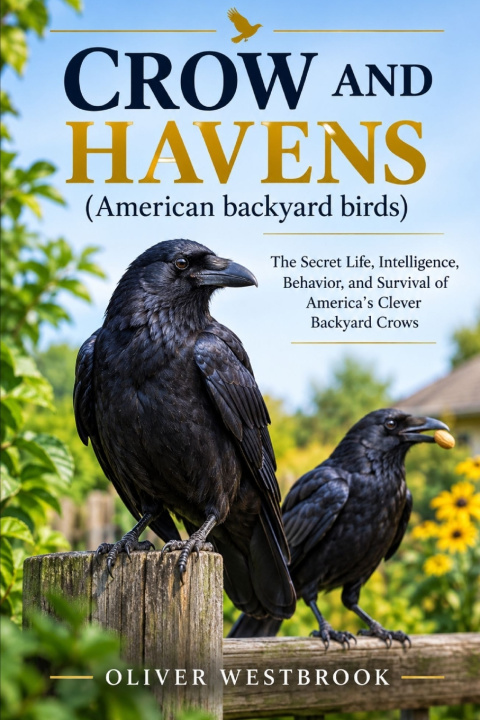
CROW AND HAVENS (American backyard birds)
The Secret Life, Intelligence, Behavior, and Survival of America's Clever Backyard Crows
 Angielski
 34 b
34 b
 Nowość
najlepszej
ceny ▸
Nawet do 30 dni na zwrot

The American crow is one of North America's most intelligent, adaptable, and socially complex backyard birds. Scientifically known as Corvus brachyrhynchos, it has successfully adapted to an extraordinary variety of environments, including forests, farmland, wetlands, suburbs, parks, and busy cities.
Its success comes from a combination of physical abilities and remarkable behavioral flexibility. Its strong bill, powerful wings, excellent senses, and sturdy body allow it to move efficiently through different environments, while its memory, learning ability, curiosity, and problem-solving skills help it respond to changing circumstances.
American crows are omnivorous and opportunistic feeders. Their diet can include insects, seeds, grains, fruits, nuts, animal matter, and carrion. Their willingness to investigate different food sources allows them to survive seasonal changes and take advantage of opportunities created by both natural ecosystems and human environments.
Family life is another important part of the crow's story. Breeding pairs build nests, protect their eggs, feed their young, and help them develop the skills necessary for independence. Young crows learn not only through direct experience but also by observing older members of their family.
Social behavior gives crows additional advantages. Family groups cooperate, communicate, and respond collectively to threats. Outside the breeding season, large numbers may gather at communal roosts. Their famous mobbing behavior demonstrates how several crows can work together to discourage potential predators.
Despite their adaptability, crows face challenges. Predators, diseases such as West Nile virus, severe weather, habitat changes, traffic, pollution, contaminated food, and other human-related hazards can affect their survival. Their intelligence helps them respond to many of these dangers, but healthy habitats remain essential.
The relationship between crows and humans is particularly fascinating. People provide both opportunities and risks. Urban areas can offer food and nesting locations, while roads, buildings, chemicals, and waste can create serious hazards. Responsible waste management, protection of mature trees, preservation of green spaces, and respectful observation can help people and crows coexist.
Ultimately, the American crow is far more than an ordinary black bird. It is an intelligent learner, devoted family member, skilled scavenger, effective communicator, and highly adaptable survivor. Its ability to remember, cooperate, investigate, and adjust to changing environments has made it one of the most successful birds in North America.
The next time a crow appears in a backyard, field, park, or city street, it is worth taking a closer look. Behind its familiar appearance is a remarkably sophisticated animal whose intelligence and social life continue to inspire curiosity and scientific study.
The American crow teaches us an important lesson about nature: survival does not always belong to the strongest animal-it often belongs to the one most capable of learning, adapting, and changing with the world around it.


Informacje o książce
Angielski

Podaruj tę książkę jeszcze dziś
To łatwe
1 Dodaj książkę do koszyka i wybierz „dostarczyć jako prezent” 2 W odpowiedzi wyślemy Ci bon 3 Książka dotrze na adres obdarowanegoCześć! Jestem Libroamiko, Twój doradca książkowy.
Jak mogę Ci pomóc?