
 Kontakt
 Jak kupować
Dostawa
Doradca ds. zakupów
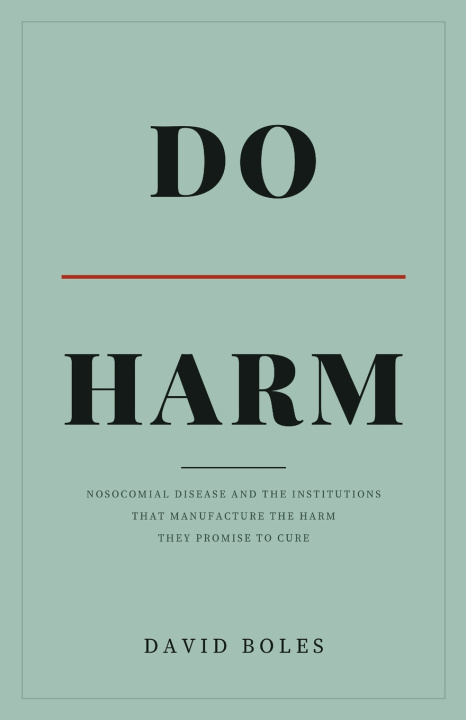
DO HARM
Nosocomial Disease and the Institutions That Manufacture the Harm They Promise to Cure
 Angielski
 49 b
49 b
 Zapowiedź
 Nowość
Nawet do 30 dni na zwrot

In 2002 a public health director in Newark asked a dramatist whether he knew the word nosocomial. He did not. Nor did any of the graduate students in the room he taught the following week.
Nosocomial means hospital-acquired. It names the illness a patient walks in without and walks out carrying. Medicine has owned the word for more than a century and worn it smooth, until it can be said in a Tuesday meeting without a change in the voice.
DO HARM is the book that afternoon opened. It begins in a Vienna maternity ward in 1847, where Ignaz Semmelweis proved from a register of the dead that he and his colleagues were the weapon, and where those colleagues broke him for naming them. It carries the proof into the present: the organisms our own antibiotics bred, the ventilator and the catheter that run infection down roads built to deliver care, and the copper that has killed bacteria since the age of the pharaohs and still goes uninstalled.
Then the harder question. If a house raised for healing manufactures fresh sickness through ordinary operation, where else does that shape appear? David Boles follows it into the prison that schools its inmates in crime, the asylum that promised safety, the classroom that drains the appetite it exists to feed, the parish and the camp and the troop where trust itself becomes the instrument, the research that priced a child's blood against a cheap repair, and the faith that kept its promise of deliverance by way of the grave.
One distinction holds the argument together. Some harm is welded to a function and cannot be removed without ending the thing people need. Much of the rest was chosen upstream and then dressed in the language of necessity so that nobody would have to answer for it. Institutions correct the harms that flatter their competence and defend the harms that indict their identity, which is why a laminated checklist was adopted in a few years and a basin of chlorine took twenty.
Every case rests on the documented public record: findings of fact from the courts, grand jury reports, government investigations, peer-reviewed research, and the reporting that first forced each harm into daylight. Nothing was invented and nothing was softened.
The hospital is worth its floor of harm. The building saves far more than it harms, which is what makes the harm so hard to look at, and there is no boycotting it. Nearly everyone alive will be carried across that threshold, as a patient or beside one, on a day chosen by an accident or a diagnosis.
The book arrives at no cure and says so from its opening page. What it asks for is smaller than a cure and harder than a motto. Name the floor of harm that cannot be removed. Remove the harm that was never a floor. Tell the patient the truth about what the cure is carrying into them. And when the machinery does harm, refuse the comfort of a blame that settles on no one at all.
David Boles trained as a dramatist at Columbia University's Oscar Hammerstein II Center and has been a member of the Dramatists Guild of America since 1984. He founded and taught a course on public health crises in the humanities at the school where this book began.
Facts matter.


Informacje o książce
Angielski

Podaruj tę książkę jeszcze dziś
To łatwe
1 Dodaj książkę do koszyka i wybierz „dostarczyć jako prezent” 2 W odpowiedzi wyślemy Ci bon 3 Książka dotrze na adres obdarowanegoCześć! Jestem Libroamiko, Twój doradca książkowy.
Jak mogę Ci pomóc?