
 Kontakt
 Jak kupować
Dostawa
Doradca ds. zakupów
 Angielski
 216 b
216 b
 Zapowiedź
 Nowość
najlepszej
ceny ▸
 Termin nieznany
Nawet do 30 dni na zwrot

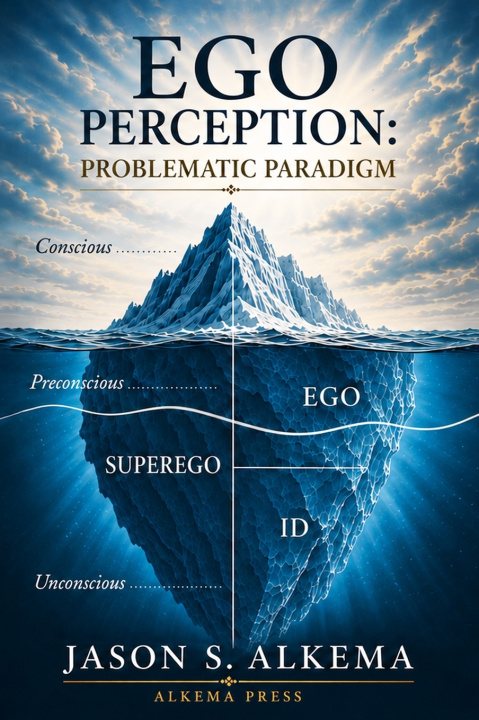
Ego Perception: Problematic Paradigm offers a whole-person reinterpretation of Sigmund Freud's structural model of the psyche and asks a fundamental question: What changes when ego is understood not as one agency within the person, but as the global organization of the person?
Jason S. Alkema reconstructs ego as the embodied individual's integrated, transacting organization and superordinate executive function. Within this framework, id and superego are not discarded; they are reconsidered as subordinate ego functions operating within the organizational whole. Intrapsychic conflict remains real, but its needs, fears, defenses, prohibitions, attachments, and competing inclinations remain dynamics of one person rather than the actions of separately reified inner agencies.
From this foundation, the book develops an integrated account of ego, self, identity, mind, consciousness and the unconscious, psychological defense, attachment, need and fear, conscience, personality organization, self-management, and reality-contact. Identity is examined as a cognitive-technological organization through which experience becomes personally meaningful. Defense is reconsidered through the regulation of attention and experiential contact. Executive attachment formation describes the organization through which identity, attachment, self-representation, affective investment, defensive expectation, and executive orientation operate together.
The work proceeds from Freud rather than around him. It engages the subsequent development of psychoanalytic and psychological thought, including ego psychology, analytical psychology, object relations, self psychology, attachment theory, systems theory, philosophy of mind, cognitive science, and related perspectives. Rather than accumulating these traditions eclectically, Ego Perception reorganizes their relevant insights within a governing model of ego as a reality-contact organization.
The resulting paradigm examines psychological development in terms of the person's increasing capacity to contact, apprehend, assimilate, and respond to actuality without sacrificing individuality. It distinguishes adaptive differentiation from pathological fragmentation, examines the relationship between identity and experience, and considers how defensive organization can preserve psychological stability while simultaneously limiting access to experience and personal capacities.
Extensive appendices develop the book's treatment of triangulation, adaptive and pathological dissociation, humanity's tripartite divisions, and a detailed alphabetized system of the work's core concepts and terminology.
Written for readers interested in psychoanalysis, psychodynamic theory, ego psychology, identity, consciousness, philosophy of mind, and the organization of human experience, Ego Perception: Problematic Paradigm proposes an integrated framework for reconsidering how the person perceives, organizes, defends against, assimilates, and responds to reality.


Informacje o książce
Angielski

Podaruj tę książkę jeszcze dziś
To łatwe
1 Dodaj książkę do koszyka i wybierz „dostarczyć jako prezent” 2 W odpowiedzi wyślemy Ci bon 3 Książka dotrze na adres obdarowanegoCześć! Jestem Libroamiko, Twój doradca książkowy.
Jak mogę Ci pomóc?