
 Kontakt
 Jak kupować
Dostawa
Doradca ds. zakupów
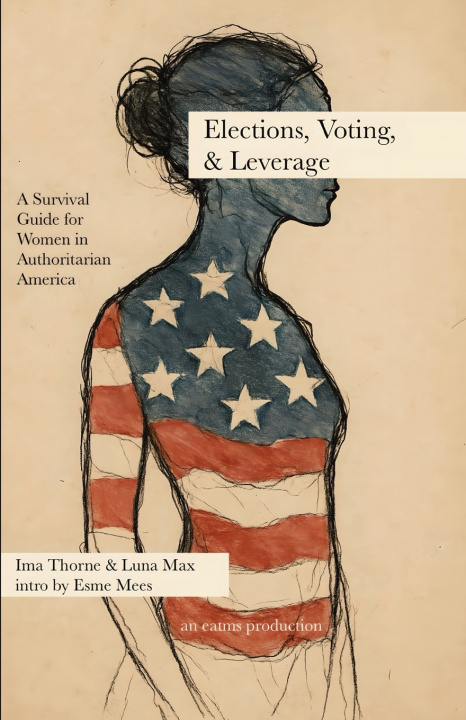
Elections, Voting, & Leverage - Civics Book 3
A Survival Guide for Women in Authoritarian America
 Angielski
 31 b
31 b
 Nowość
najlepszej
ceny ▸
Nawet do 30 dni na zwrot

Elections, Voting, & Leverage is the third book in the EATMS Productions Civics series, a practical political survival guide for women trying to understand how elections actually work, how they are manipulated, and where leverage still exists before, during, and after election day. Book 1 mapped the machinery of American government. Book 2 explained the parties, ideologies, and political language operating inside that machinery. This volume explains elections as a system: where votes land, how districts are drawn before voters arrive, how suppression narrows participation, how campaigns use money and fear, what ballot initiatives can do, and what forms of pressure remain after the vote is counted.
Written by Ima Thorne and Luna Max, with an introduction by Esme Mees, this book examines voting as a real tool operating inside a damaged structure. It covers primaries and local races, where political direction is often set quietly by organized minorities in low-turnout elections. It explains gerrymandering as a power problem, not a map problem, and the Electoral College as a filter that makes some votes strategically invisible to presidential campaigns. It names voter suppression as design rather than administrative accident, showing how ID requirements, registration purges, polling place closures, reduced voting hours, mail ballot restrictions, felony disenfranchisement, misinformation, and intimidation work together to raise the cost of participation for specific voters in specific places.
The book also covers ballot initiatives as direct power, explaining when voters can bypass hostile legislatures and what the limits of that tool are. It explains campaigns as operations built around money, data, consultants, field work, and fear, and helps the reader understand what her time and money actually accomplish inside a campaign. It argues that election day is not the end of civic responsibility but the beginning of a different kind of pressure: constituent contact, public comment, legislative tracking, town halls, watchdog journalism, records requests, and the sustained accountability work that keeps officials from treating voters as finished once the votes are counted.
Beyond the ballot, the book expands the frame to labor organizing, legal challenges, public comment, watchdog pressure, boycotts, mutual aid, professional associations, local board participation, and community defense. The final chapter helps the reader build a civic survival plan based on her actual time, energy, local conditions, and capacity, with tools for deciding where effort can realistically land.
This is not a get-out-the-vote brochure, a civics textbook, or a nonprofit civic engagement guide. It is a field guide to elections as they actually function inside a manipulated but still reachable political structure. For readers interested in voting rights, voter suppression, gerrymandering, the Electoral College, ballot initiatives, campaign strategy, women's political power, post-election accountability, local races, primaries, and what leverage looks like beyond the ballot, this book offers a clear, blunt, women-centered guide. It does not ask the reader to love the system, trust the campaign, or confuse participation with rescue. It asks her to know where the leverage is.


Informacje o książce
Angielski

Podaruj tę książkę jeszcze dziś
To łatwe
1 Dodaj książkę do koszyka i wybierz „dostarczyć jako prezent” 2 W odpowiedzi wyślemy Ci bon 3 Książka dotrze na adres obdarowanegoCześć! Jestem Libroamiko, Twój doradca książkowy.
Jak mogę Ci pomóc?