
 Kontakt
 Jak kupować
Dostawa
Doradca ds. zakupów
 Angielski
 63 b
63 b
najlepszej
ceny ▸
Nawet do 30 dni na zwrot
Klienci kupili także





 /
/
 Miękka
 64.97
zł
64.97
zł
 /
Miękka
113.38
zł
/
Miękka
113.38
zł



 /
Miękka
51.06
zł
/
Miękka
51.06
zł

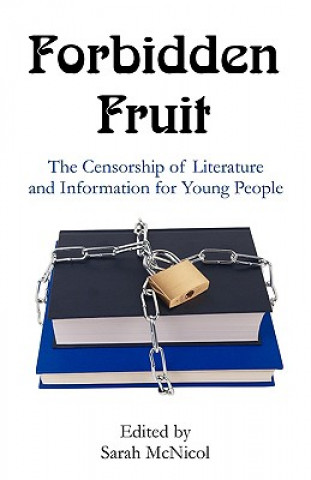
Forbidden Fruit: The Censorship of Literature and Information for Young People was a two day conference held in Southport, UK in June 2008. This collection of papers from the conference will be of interest to teachers, school and public librarians, publishers, and other professionals involved in the provision of literature and information resources for young people, as well as to researchers and students. The proceedings draw together some of the latest research in this area from a number of fields, including librarianship, education, literature, and linguistics. The topics covered include translations and adaptations, pre-censorship by authors, publishers and editors, LGBT (lesbian, gay, bi-sexual and trans) materials, and the views of young people themselves. The papers included in the proceedings deal with a wide range of issues. Research student Lucy Pearson takes a historical perspective, considering the differences in the way in which two titles, Young Mother in the 1960s and Forever in the 1970s, handle the theme of teenage sexuality. John Harer from the United States and Elizabeth Chapman and Caroline Wright from the UK also deal with the controversial issue of teenage sexuality. Both papers are concerned with the censorship of LGBT (lesbian, gay, bi-sexual, and trans) materials for young people, especially referring to issues faced by librarians in dealing with such resources in their respective countries. Another writer to examine the issue from a librarianship perspective is Wendy Stephens, who reports on her action research into students' reactions to book banning and censorship in the context of a twelfth-grade English literature research project. Taking one step back from the question of access to controversial materials, Cherie Givens reports on her doctoral research examining the often neglected issue of pre-censorship-- that is, restrictions which take place, usually as a result of pressure from editors and publishers, before materials reach the library shelves. Showing a different side of the publishing industry, Christopher Gruppetta writes from the perspective of a publisher keen to promote young adult fiction in Malta. His article demonstrates the huge strides which can take place in a relatively short period of time, even in a religiously conservative country. Talks by young adult authors were also included in the conference programme. Ioanna Kaliakatsou considers how self-censorship is exercised by authors and how attitudes have changed since the early twentieth century. Yet another point at which works might be censored is when they are translated or adapted. Evangelia Moula focuses on censorship in adaptations of classic Greek tragedies, while Helen T. Frank examines Australian children's fiction translated into French to highlight the process of 'purification' or 'sanitization' that can occur during translations.


Informacje o książce
Angielski
Kategoria

Podaruj tę książkę jeszcze dziś
To łatwe
1 Dodaj książkę do koszyka i wybierz „dostarczyć jako prezent” 2 W odpowiedzi wyślemy Ci bon 3 Książka dotrze na adres obdarowanegoMogłoby Cię także zainteresować



 /
Miękka
107.04
zł
/
Miękka
107.04
zł
 /
Miękka
29.97
zł
/
Miękka
29.97
zł



 /
Miękka
79.51
zł
/
Miękka
79.51
zł
 /
Miękka
101.10
zł
/
Miękka
101.10
zł

Cześć! Jestem Libroamiko, Twój doradca książkowy.
Jak mogę Ci pomóc?