
 Kontakt
 Jak kupować
Dostawa
Doradca ds. zakupów
 Angielski
 36 b
36 b
 Zapowiedź
 Nowość
Nawet do 30 dni na zwrot

Your Godot prototype works. Then the project grows.
More features mean more scripts. More scripts mean more dependencies. Before long, the Scene Tree becomes difficult to understand, gameplay logic becomes tightly coupled, and making a simple change can unexpectedly break something else.
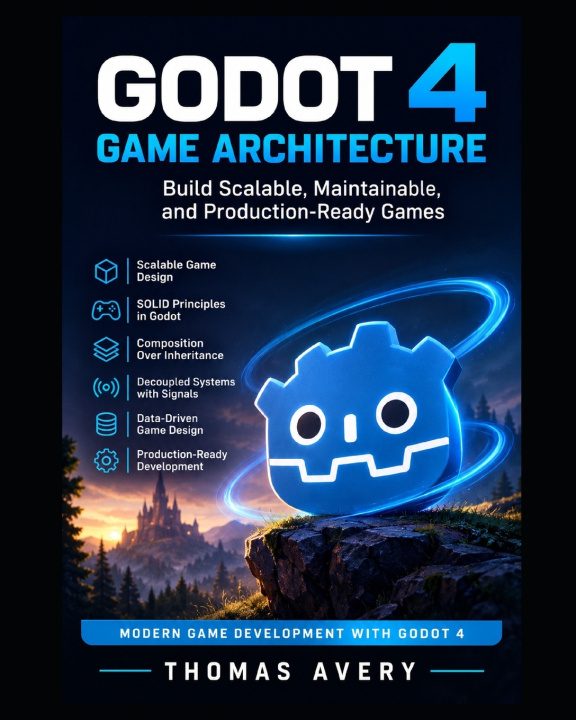
Godot 4 Game Architecture by Thomas Avery is a practical guide to designing Godot projects that remain organized, flexible, and maintainable as they grow.
Rather than focusing on how to make your first Godot game, this book focuses on what happens after the prototype works-when your project needs better architecture, reusable systems, clearer boundaries, and a structure capable of supporting continued development.
Inside, you'll learn how to:
Design Godot projects that remain manageable as they grow
Decide when to use scenes, nodes, scripts, and Resources
Organize large Godot projects for long-term maintainability
Apply SOLID principles without unnecessarily complicating your game
Favor composition and reusable components where appropriate
Use signals to reduce unnecessary dependencies between systems
Separate gameplay logic from data using Resources and data-driven design
Build flexible gameplay systems with State, Strategy, and Command patterns
Use Factory and Builder patterns when object creation becomes complex
Design audio, save, input, and other shared systems without excessive global state
Manage Autoloads and dependencies thoughtfully
Structure player, enemy, combat, inventory, and progression systems
Design gameplay systems that can evolve as new features are introduced
Improve the testability and maintainability of your game code
Recognize and reduce technical debt
Refactor growing projects without creating unnecessary complexity
Prepare Godot projects for production and continued development
You'll encounter practical architectural decisions rather than pattern demonstrations created simply for the sake of using a pattern. The goal is to understand why a particular approach makes sense, when it doesn't, and what trade-offs it introduces.
Whether you're an indie developer building a larger game, a programmer moving beyond Godot prototypes, a technical lead working with a small team, or a developer looking to strengthen your game architecture skills, this book provides a practical framework for thinking about scalable Godot development.
Build games that can grow without becoming impossible to maintain.
Build better systems. Make better architectural decisions. Create Godot projects designed to last.


Informacje o książce
Angielski
