
 Kontakt
 Jak kupować
Dostawa
Doradca ds. zakupów
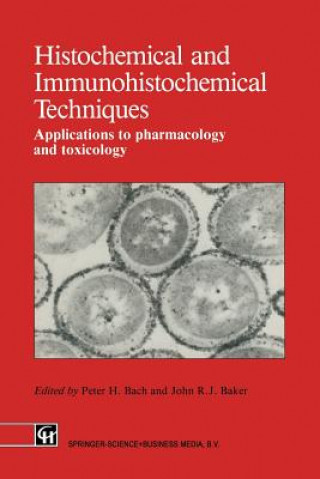
Histochemical and Immunohistochemical Techniques
Applications to pharmacology and toxicology
 Angielski
 125 b
125 b
Nawet do 30 dni na zwrot
Klienci kupili także













Toxicological and pharmacological effects arise when chemicals interact with biophysiological functions in discrete cell types. There is a continuing need to screen novel compounds for their potential therapeutic effects, and once these have been "discovered" to understand their molecular actions, as the basis of using such compounds safely and for rational drug design. Pharmacology now uses all of the sophisticated molecular research techniques that are available for the development of safer and more efficacious drugs. Histochemistry has been usefully applied to developing new drugs (and assessing chemical safley) and is potentially cost effective. The need to test novel substances for their potential adverse effects has raised many questions. Toxicological pathology has moved away from the cataloging of lesions towards understanding the basis of the events that underly cell injury, especially for those secondary consequences of chemical injury that lead to malignancy and chronic disease. The focal nature of toxicologic lesions de mands the use of microtechniques to provide data to help understand these questions. Histochemistry is under-utilized, but offers one of the key ap proaches necessary to address the problem of understanding interactions between a cell population and a chemical, the modulation of cellular biochem istryor the presence of a lesion in a test animal can be rationalised in terms of species differences that have no relevance to man as opposed to those that are of clinical significance or represent a warning of dire consequences to man.


Informacje o książce
Angielski

Podaruj tę książkę jeszcze dziś
To łatwe
1 Dodaj książkę do koszyka i wybierz „dostarczyć jako prezent” 2 W odpowiedzi wyślemy Ci bon 3 Książka dotrze na adres obdarowanegoMogłoby Cię także zainteresować
 /
/
 Miękka
 884.59
zł
884.59
zł
 /
Miękka
63.94
zł
/
Miękka
63.94
zł




 /
Miękka
46.73
zł
/
Miękka
46.73
zł



 /
Miękka
152.53
zł
/
Miękka
152.53
zł
 /
Miękka
66.99
zł
/
Miękka
66.99
zł





 /
Miękka
476.56
zł
/
Miękka
476.56
zł



 /
Twarda
574.82
zł
/
Twarda
574.82
zł


Cześć! Jestem Libroamiko, Twój doradca książkowy.
Jak mogę Ci pomóc?