Darmowa dostawa dla zamówień powyżej 299,00 zł.

Zostań członkiem wspólnoty miłośników książek z całego świata i zyskaj mnóstwo korzyści.
Załóż konto bezpłatnie
Darmowa dostawa z usługą Inpost oraz Orlen od 299.00 zł
DPD Kurier 12.99 zł
Poczta Polska 18.99 zł
Paczkomat 13.99 zł
InPost Kurier 12.99 zł
Punkt DPD 11.99 zł
 Kontakt
 Jak kupować
Pomoc
Dostawa
DPD Kurier 12.99 zł
Poczta Polska 18.99 zł
Paczkomat 13.99 zł
InPost Kurier 12.99 zł
Punkt DPD 11.99 zł
Darmowa dostawa z usługą Inpost oraz Orlen od 299.00 zł
Doradca ds. zakupów
Jesteśmy tu dla Ciebie!
(32) 444 93 66
Moje konto
▸
Pusty :-(
0
Darmowa dostawa dla zamówień powyżej 299,00 zł.
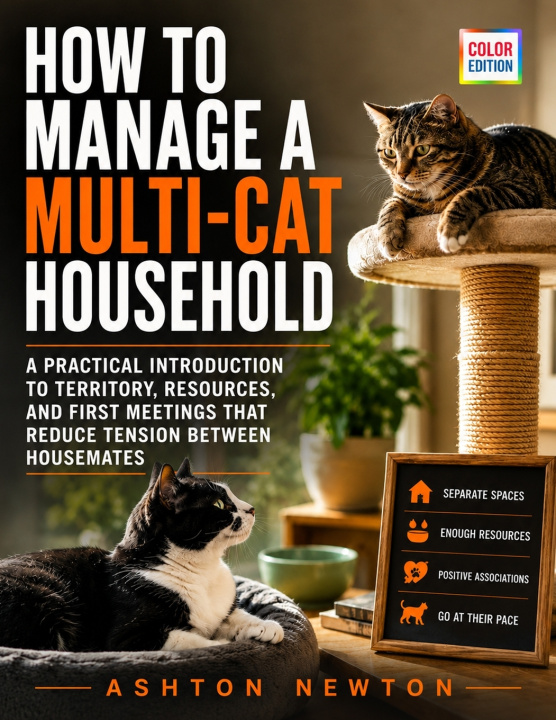
How To Manage a Multi-Cat Household
A Practical Introduction to Territory, Resources, and First Meetings That Reduce Tension Between Housemates
Język
 Angielski
Angielski
Książka
Miękka
Six stages. Three kinds of territory a cat will defend without ever throwing a punch. Ten chapters,...
Cały opis
Kod Libristo: 53440826
?
 50 b
50 b
 Nowość
50 b
Nowość
89.80
zł
Zapowiedź
Wydanie 08. 08. 2026
Nawet do 30 dni na zwrot
Mogłoby Cię także zainteresować



 /
/
 Miękka
 90.62
zł
90.62
zł








Six stages. Three kinds of territory a cat will defend without ever throwing a punch. Ten chapters, one quick-reference card, and a warning ladder most owners never learn to read until the fight has already started.
This book lays out the complete, sequenced process for bringing a new cat into a home that already has one, from the honest readiness question nobody asks early enough, through building a home that gives every cat no reason to compete, to the weekly check that keeps a hard-won peace holding years later.
It replaces the vague advice to simply let two cats work it out with the actual mechanics of what a cat defends and how it defends it.
The Six-Stage System
- Assess real readiness before a carrier ever comes through the door, using a documented week of honest observation instead of a hopeful guess
- Build separate litter boxes, feeding stations, vertical space, and retreat spots using the resource math most guides skip entirely
- Swap scent between both cats for three to five consecutive days, using a soft cloth on each cat and letting the scent settle for a full day
- Run barrier sessions that let both cats see and hear each other through a secure door, screen, or gate while nothing can physically go wrong
- Move into short supervised meetings, timed and ended on your terms rather than the moment things start to feel calm enough to relax
- Keep a weekly monitoring habit running for as long as the household includes more than one cat, checking rest, mealtime, and litter use
- Troubleshoot a stalled or failed introduction by rebuilding deliberately from the last point of genuine calm, never from scratch
Get that sequence right and a genuine number of the conflicts described later in this book simply never happen, because the two cats involved never had a real reason to compete for anything essential in the home.
Reading the Warning Signs
- The exact five-stage warning ladder, from a slow tail flick to a full altercation, and precisely what to do at each of the five stages
- Why a narrow hallway or an ordinary doorway becomes a contested bottleneck long before either cat ever raises its voice at all
- The real, reliable difference between rough play and actual aggression between two cats, explained clearly and simply in under a minute
- What non-recognition aggression actually is, and why a cat fresh home from the vet sometimes gets hissed at by its own housemate
- Why mutual grooming between two cats, called allogrooming, is one of the clearest signs they have moved past tolerance into a bond
Six stages. One sequence. A household where every cat can reach food, water, a litter box, and a place to retreat without ever crossing another cat's path.
And where cats can simply exist together without competing for anything essential, whether this is cat number two, cat number four, or cat number six in a growing home.
The detour your cat takes through the dining room instead of the hallway is not random. Chapter two explains exactly what it means.
Aktorka
&
Poliglotka
EWA KASP
dla
Odtworzyć wideo


Libristo ma największy wybór literatury obcojęzycznej. Dlatego tutaj kupuję swoje książki.
Informacje o książce
Pełna nazwa
How To Manage a Multi-Cat Household
Autor
Ashton Newton
Język
Angielski
Angielski
Oprawa
Książka - Miękka
Data wydania
2026
Liczba stron
96
EAN
9798190591101
Kod Libristo
53440826
Wydawnictwo
Independently published
Waga
245
Wymiary
216 x 280 x 5
