
 Kontakt
 Jak kupować
Dostawa
Doradca ds. zakupów
 Angielski
 137 b
137 b
Nawet do 30 dni na zwrot
Klienci kupili także








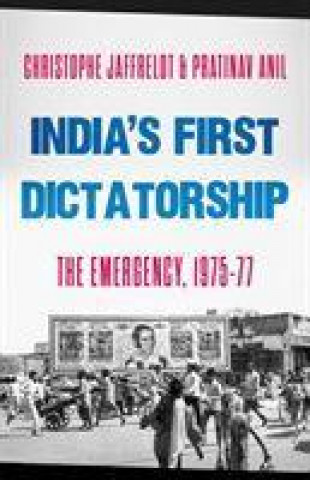
In June 1975 Prime Minister Indira Gandhi imposed a state of emergency, resulting in a 21-month suspension of democracy. Jaffrelot and Anil explore this black page in India's history, a constitutional dictatorship of unequal impact, with South India largely spared thanks to the resilience of Indian federalism. India's First Dictatorship focuses on Mrs Gandhi and her son, Sanjay, who was largely responsible for the mass sterilisation programmes and deportation of urban slum-dwellers. However, it equally exposes the facilitation of authoritarian rule by Congressmen, Communists, trade unions, businessmen and the urban middle class, as well as the complacency of the judiciary and media. While opposition leaders eventually closed ranks in jail, many of them—especially in the RSS—tried to collaborate with the new regime. Those who resisted the Emergency, in the media or on the streets, were few in number. This episode was an acid test for India's political culture. While a tiny minority of citizens fought for democracy during the Emergency, in large numbers the people bowed to the strong woman in power, even worshipped her. Equally importantly, Hindu nationalists were endowed with a new legitimacy. Yet, the Emergency was neither a parenthesis, nor so much a turning point but a concentrate of a style of rule that is very much alive today.


Informacje o książce
Angielski

Podaruj tę książkę jeszcze dziś
To łatwe
1 Dodaj książkę do koszyka i wybierz „dostarczyć jako prezent” 2 W odpowiedzi wyślemy Ci bon 3 Książka dotrze na adres obdarowanegoMogłoby Cię także zainteresować






 /
/
 Twarda
 554.93
zł
554.93
zł
Cześć! Jestem Libroamiko, Twój doradca książkowy.
Jak mogę Ci pomóc?