
 Kontakt
 Jak kupować
Dostawa
Doradca ds. zakupów
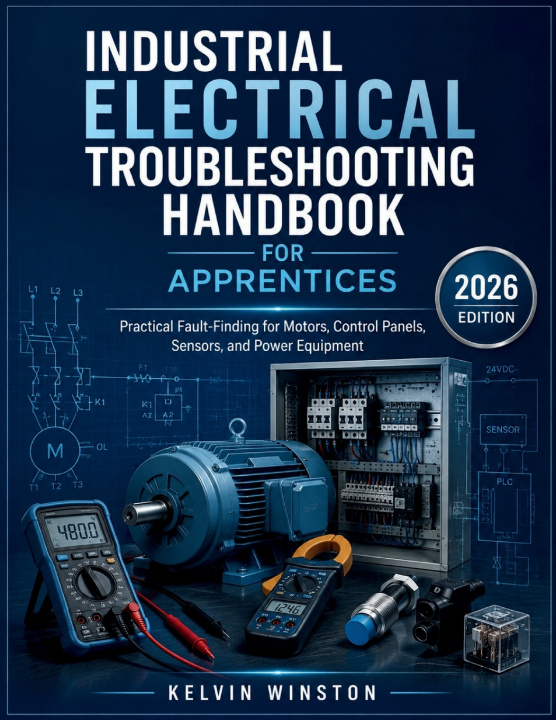
Industrial Electrical Troubleshooting Handbook For Apprentices
Practical Fault-Finding for Motors, Control Panels and Power Equipment
 Angielski
 265 b
265 b
 Nowość
najlepszej
ceny ▸
Nawet do 30 dni na zwrot

A machine trips on overload and gets reset three times before anyone checks what caused it. A sensor reads fine on the bench and lies on the machine. Industrial electrical troubleshooting rewards a method, not a memorized list of symptoms.
Most electrical trade references teach components and code requirements without building the systematic fault-finding process an apprentice actually needs standing in front of a stopped machine, where guessing wrong costs downtime, parts, and sometimes safety.
This handbook builds a complete troubleshooting method from the ground up: electrical safety and safe practices first, then the principles, instruments, and drawing-reading skills needed to apply a systematic method to motors, control circuits, sensors, drives, PLCs, and integrated plant systems.
What This Book Covers
- Work safely around industrial electrical systems and follow safe troubleshooting practices.
- Build the electrical principles every apprentice needs, through three-phase fault interpretation.
- Select the right test instrument, make the right connection, and trust only defensible readings.
- Read schematics, wiring diagrams, and panel drawings as a reliable map of the machine.
- Apply a systematic troubleshooting method instead of guessing or swapping parts.
- Diagnose conductors, terminations, fuses, circuit breakers, and industrial AC and DC motors.
- Troubleshoot contactors, motor starters, overload protection, relays, timers, and control circuits.
- Work with limit switches, proximity sensors, process devices, variable-frequency drives, and soft starters.
- Diagnose PLC inputs and outputs, control panels, MCCs, distribution equipment, and power-quality problems.
- Solve integrated machine faults, plan preventive maintenance, and diagnose safety-circuit and communication faults.
Who this book is for: Electrical apprentices, industrial maintenance technicians, and controls trainees who need a systematic, safe method for diagnosing real faults on motors, control panels, sensors, and power equipment - not just a components reference.
Get your copy and start troubleshooting industrial electrical systems with a method, not a guess.


Informacje o książce
Angielski
