
 Kontakt
 Jak kupować

Dostawa
Doradca ds. zakupów
 Angielski
 36 b
 Nowość
najlepszej
ceny ▸
Nawet do 30 dni na zwrot
Klienci kupili także


There is a Filipino word for the kind of care that most modern adults have become very good at talking about - and not very good at actually doing.
The word is malasakit.
It means, roughly, active care. Care that moves. Care that arrives with hands. Care that shows up before anyone has asked, sustains itself across decades, and never requires a thank you.
It is what allows a Filipino domestic worker in Hong Kong to support thirty-seven family members back home, every month, for thirty-four years - and to consider this not a sacrifice but the substance of her life.
It is what makes Filipino nurses, who are four percent of the United States nursing workforce despite Filipinos being one percent of the global population, the most consistently requested bedside caregivers in major hospital systems across the Anglosphere and the Gulf.
It is what mobilises tens of thousands of Filipinos within forty-eight hours of every typhoon - cooking, hauling, sheltering, rescuing - without any central command, simply because that is what they do.
It is the philosophical substrate of the most undersung global redistribution system on earth: thirty-five billion dollars in annual remittances flowing from ten million overseas Filipino workers back to their families, sustained entirely by personal commitment, with no institutional infrastructure.
The modern world has become extraordinarily articulate about caring - and increasingly poor at the practice. The Filipino tradition, despite all its other struggles, has retained the practice while developing only modest vocabulary around it. The articulation has grown. The doing has shrunk. This is one of the central pathologies of our age.
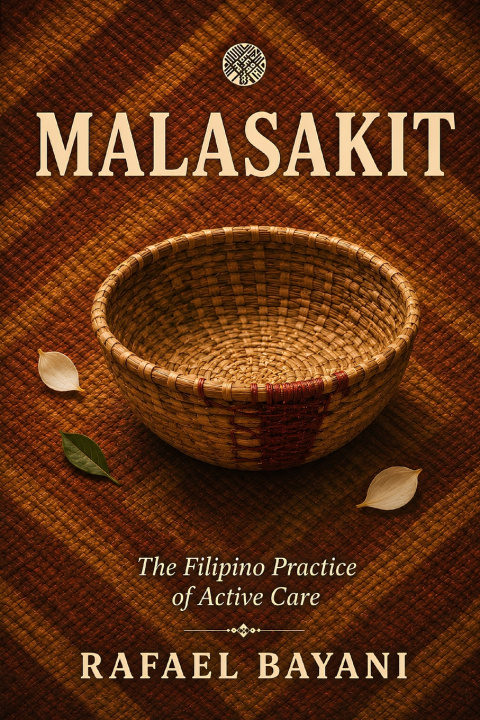
In Malasakit, Rafael Bayani offers the fifth book in The Filipino Way series - a patient, literary recovery of the most practically valuable form of caring that any culture has produced, and a guide to bringing it back into your own life.
Inside this book, you will discover:
- The four hallmarks of mature malasakit - and how to tell the difference between care that genuinely acts and the modern "verbal-and-digital" care that performs without doing
- What the Filipino diaspora has been quietly demonstrating for fifty years - the world's largest non-governmental welfare system, sustained entirely by individual moral commitment
- Why Filipino nurses produce measurably better patient outcomes - and what their bedside practice teaches every workplace about caring as professional excellence
- How Filipinos respond to disasters in the gap before institutions arrive - and the four practices you can adopt now to keep the muscle of mutual aid alive in ordinary times
- The architecture of raising children who care in ways that move - and why the modern Western household has structurally lost the conditions that produce this
- How to build the friendships that show up, in malasakit terms, when you genuinely need them - and why most adults arrive at fifty without any
- What malasakit looks like in a corporate meeting, a project team, a leadership role - and why technique-based "compassionate leadership" frameworks consistently fail
- The shadow side - the eldest daughter pattern, the OFW who dies alone in Dubai, the compulsive carer whose loob has dried - and the four limits that protect the sustainable practice
- The three orbits of care (inner, middle, outer) and the daily, weekly, and yearly rhythms that build malasakit into a life that lasts
The Filipino tradition's centuries-old practice of caring that acts - and how to recover it in a world that has nearly forgotten how.
The Japanese gave the world ikigai. The Danes gave the world hygge. The Koreans gave the world nunchi.


Informacje o książce
Angielski

Podaruj tę książkę jeszcze dziś
To łatwe
1 Dodaj książkę do koszyka i wybierz „dostarczyć jako prezent” 2 W odpowiedzi wyślemy Ci bon 3 Książka dotrze na adres obdarowanegoMogłoby Cię także zainteresować






Cześć! Jestem Libroamiko, Twój doradca książkowy.
Jak mogę Ci pomóc?