
 Kontakt
 Jak kupować
Dostawa
Doradca ds. zakupów
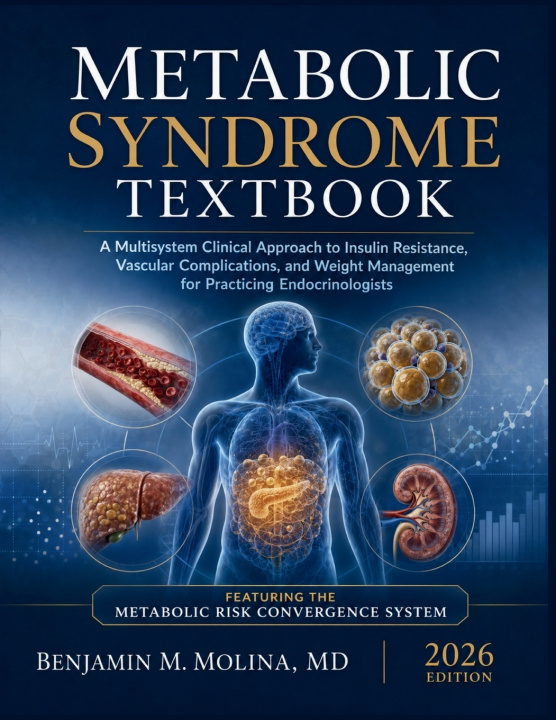
Metabolic Syndrome Textbook
A Multisystem Clinical Approach to Insulin Resistance, Vascular Complications, and Weight Management for Practicing Endocrinologists
 Angielski
 595 b
595 b
 Nowość
Nawet do 30 dni na zwrot

Metabolic syndrome rarely presents as a single problem. Central adiposity, insulin resistance, dysglycemia, hypertension, atherogenic dyslipidemia, hepatic steatosis, kidney injury, sleep apnea, and vascular disease develop through connected biological pathways-and require coordinated clinical decisions. Written for practicing endocrinologists, this textbook links adipose, hepatic, pancreatic, vascular, renal, and reproductive mechanisms to complication-centered assessment and treatment across the lifespan.
The Metabolic Risk Convergence System helps clinicians identify the dominant outcome threat, select the first treatment priority, and monitor whether therapy is reducing risk across multiple organs.
• Define metabolic syndrome within the evolving cardiovascular-kidney-metabolic framework - distinguish diagnostic criteria from the organ-risk patterns that determine prognosis.
• Perform structured metabolic phenotyping - integrate waist circumference, body composition, glycemia, blood pressure, lipoproteins, albuminuria, liver fibrosis, and sleep findings.
• Trace insulin resistance across organs - connect visceral adiposity, adipokines, inflammation, hepatic glucose production, muscle glucose uptake, and pancreatic β-cell stress.
• Manage the core metabolic components - coordinate obesity, diabetes, hypertension, and dyslipidemia treatment without reducing care to isolated laboratory targets.
• Detect multisystem complications earlier - assess ASCVD, CKD, MASLD, obstructive sleep apnea, PCOS, reproductive dysfunction, cognitive risk, and mobility limitation.
• Select cross-system pharmacotherapy - sequence incretin-based therapy, SGLT2 inhibition, cardiorenal protection, lipid lowering, antihypertensive treatment, and liver-directed care.
• Evaluate metabolic surgery and endoscopic therapy - compare procedures, expected outcomes, nutritional risks, medication changes, and weight-recurrence pathways.
• Navigate complex long-term care - adapt treatment for children, pregnancy, menopause, frailty, severe mental illness, disability, HIV, and post-surgical surveillance.
Use the Metabolic Risk Convergence Atlas to move from scattered abnormalities to a defensible plan that protects the organs most at risk.


Informacje o książce
Angielski
