
 Kontakt
 Jak kupować
Dostawa
Doradca ds. zakupów
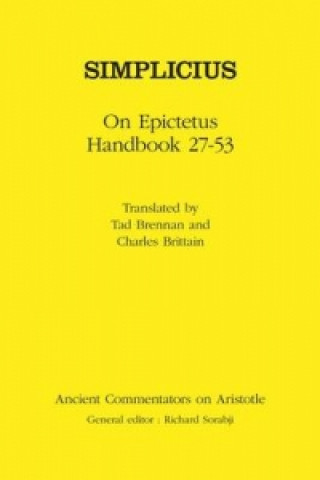
On Epictetus "Handbook 27-53"
 Angielski
 397 b
397 b
Nawet do 30 dni na zwrot
Klienci kupili także











The "Enchiridion" or "Handbook" of the first-century AD Stoic Epictetus was used as an ethical treatise both in Christian monasteries and by the sixth-century pagan Neoplatonist Simplicius. Simplicius chose it for beginners, rather than Aristotle's "Ethics", because it presupposed no knowledge of logic. We thus get a fascinating chance to see how a pagan Neoplatonist transformed Stoic ideas. The text was relevant to Simplicius because he too, like Epictetus, was teaching beginners how to take the first steps towards eradicating emotion, although he is unlike Epictetus in thinking that they should give up public life rather than acquiesce, if public office is denied them. Simplicius starts from a Platonic definition of the person as rational soul, not body, ignoring Epictetus' further whittling down of himself to just his will or policy decisions. He selects certain topics for special attention in chapters 1, 8, 27 and 31. Things are up to us, despite Fate. Our sufferings are not evil, but providential attempts to turn us from the body. Evil is found only in the human soul. But evil is parasitic (Proclus' term) on good. The gods exist, are provident, and cannot be bought off. With nearly all of this the Stoics would agree, but for quite different reasons, and their own distinctions and definitions are to a large extent ignored. This translation of the "Handbook" is published in two volumes. This is the second volume, covering chapters 27-53; the first covers chapters 1-26.


Informacje o książce
Angielski

Podaruj tę książkę jeszcze dziś
To łatwe
1 Dodaj książkę do koszyka i wybierz „dostarczyć jako prezent” 2 W odpowiedzi wyślemy Ci bon 3 Książka dotrze na adres obdarowanegoMogłoby Cię także zainteresować






Cześć! Jestem Libroamiko, Twój doradca książkowy.
Jak mogę Ci pomóc?