
 Kontakt
 Jak kupować
Dostawa
Doradca ds. zakupów
 Angielski
 33 b
33 b
 Nowość
najlepszej
ceny ▸
Nawet do 30 dni na zwrot

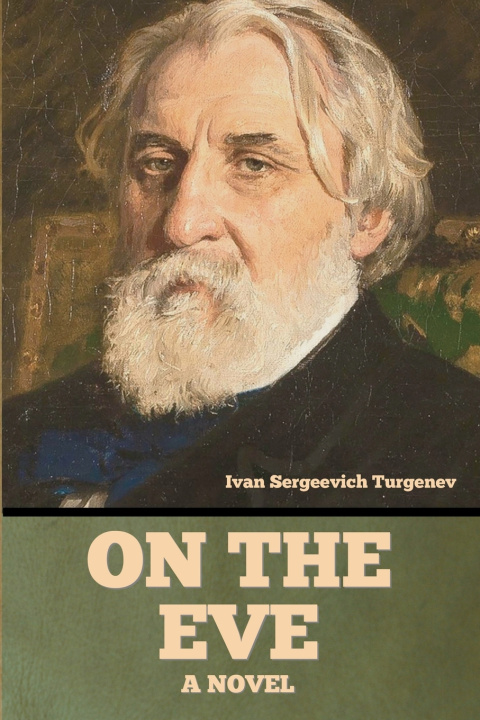
On the Eve is a novel by Ivan Sergeevich Turgenev that explores the tension between personal desire and political commitment in pre-revolutionary Russian society. The story centers on Elena Stakhova, a young woman from a privileged background who feels emotionally and intellectually unfulfilled in her environment. Her search for meaning leads her into a complicated relationship with the Bulgarian revolutionary Dmitri Insarov, whose dedication to political liberation contrasts sharply with the passive, aristocratic world she comes from.
A major theme of the novel is the conflict between private happiness and public duty. Insarov represents the ideal of self-sacrifice for a larger cause, while Elena is torn between love and the desire to live a purposeful life. Around them, Turgenev presents a range of characters-such as the thoughtful but indecisive Shubin-who highlight different responses to social change. Through these figures, the novel raises questions about whether individual fulfillment can exist independently of moral or political engagement.
Ultimately, On the Eve reflects Turgenev's broader interest in generational change and the emergence of new ideological movements in Russia. The novel is less about dramatic action and more about inner struggle and philosophical uncertainty. Its ending, marked by loss and unresolved longing, emphasizes Turgenev's belief that ideals often come at a personal cost, leaving readers with a sense of both admiration and melancholy about the characters' choices.
About the Author
Ivan Sergeevich Turgenev (1818-1883) was a major figure in 19th-century Russian literature, known for his refined prose style and insightful portrayals of social change. Born into a wealthy landowning family in Oryol, Turgenev received a privileged education that included studies in Moscow, St. Petersburg, and Berlin. His early exposure to Western European philosophy and literature deeply influenced his worldview, helping shape his later role as a cultural bridge between Russia and Europe.
Turgenev gained prominence with works that explored the tensions within Russian society, especially between generations and ideological movements. His most famous novel, Fathers and Sons (1862), introduced the character Bazarov, often considered one of literature's first nihilists. Through such works, Turgenev examined themes like reform, tradition, love, and the changing social order, often portraying the struggles of individuals caught between old aristocratic values and emerging modern ideas. His writing is noted for its psychological depth, subtle humor, and lyrical depiction of the Russian countryside.
Although celebrated in Russia, Turgenev spent much of his later life abroad, particularly in France and Germany, where he associated with prominent European writers like Gustave Flaubert and Henry James. He played a key role in introducing Russian literature to Western audiences, influencing perceptions of Russian culture across Europe. Despite occasional criticism from Russian contemporaries who found him too Westernized, Turgenev remains a central figure in world literature, admired for his elegance, empathy, and nuanced exploration of human relationships.


Informacje o książce
Angielski
Kategoria

Podaruj tę książkę jeszcze dziś
To łatwe
1 Dodaj książkę do koszyka i wybierz „dostarczyć jako prezent” 2 W odpowiedzi wyślemy Ci bon 3 Książka dotrze na adres obdarowanegoCześć! Jestem Libroamiko, Twój doradca książkowy.
Jak mogę Ci pomóc?