
 Kontakt
 Jak kupować
Dostawa
Doradca ds. zakupów
 Angielski
 373 b
373 b
Nawet do 30 dni na zwrot
Klienci kupili także




 /
/
 Twarda
 96.70
zł
96.70
zł





 /
Miękka
171.70
zł
/
Miękka
171.70
zł











 /
Miękka
122.62
zł
/
Miękka
122.62
zł

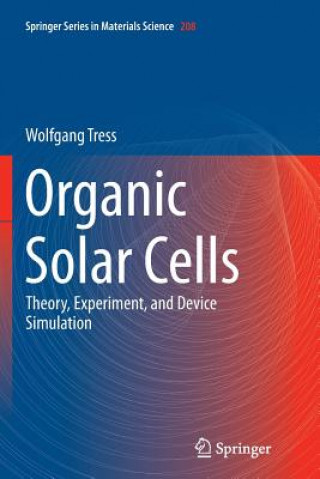
This book covers in a textbook-like fashion the basics or organic solar cells, addressing the limits of photovoltaic energy conversion and giving a well-illustrated introduction to molecular electronics with focus on the working principle and characterization of organic solar cells. Further chapters based on the author's dissertation focus on the electrical processes in organic solar cells by presenting a detailed drift-diffusion approach to describe exciton separation and charge-carrier transport and extraction. The results, although elaborated on small-molecule solar cells and with focus on the zinc phthalocyanine: C60 material system, are of general nature. They propose and demonstrate experimental approaches for getting a deeper understanding of the dominating processes in amorphous thin-film based solar cells in general. The main focus is on the interpretation of the current-voltage characteristics (J-V curve). This very standard measurement technique for a solar cell reflects the electrical processes in the device. Comparing experimental to simulation data, the author discusses the reasons for S-Shaped J-V curves, the role of charge carrier mobilities and energy barriers at interfaces, the dominating recombination mechanisms, the charge carrier generation profile, and other efficiency-limiting processes in organic solar cells. The book concludes with an illustrative guideline on how to identify reasons for changes in the J-V curve. This book is a suitable introduction for students in engineering, physics, material science, and chemistry starting in the field of organic or hybrid thin-film photovoltaics. It is just as valuable for professionals and experimentalists who analyze solar cell devices.


Informacje o książce
Angielski
Kategoria

Podaruj tę książkę jeszcze dziś
To łatwe
1 Dodaj książkę do koszyka i wybierz „dostarczyć jako prezent” 2 W odpowiedzi wyślemy Ci bon 3 Książka dotrze na adres obdarowanegoMogłoby Cię także zainteresować










 /
Twarda
280.19
zł
/
Twarda
280.19
zł






 /
Miękka
181.33
zł
/
Miękka
181.33
zł




Cześć! Jestem Libroamiko, Twój doradca książkowy.
Jak mogę Ci pomóc?