
 Kontakt
 Jak kupować
Dostawa
Doradca ds. zakupów
 Angielski
 43 b
43 b
Nawet do 30 dni na zwrot

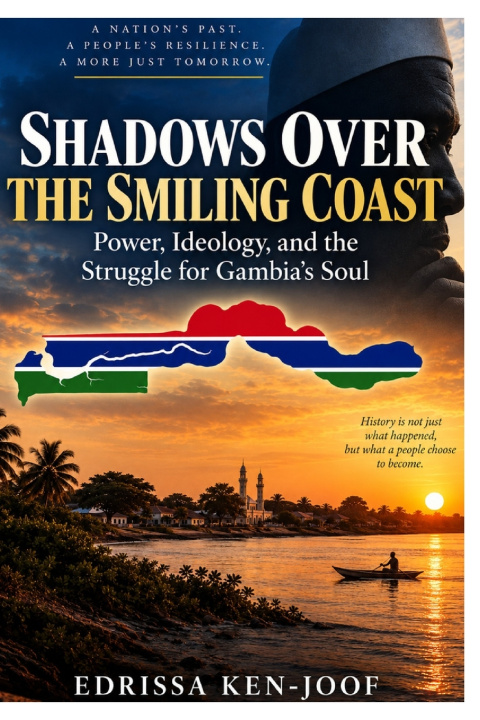
Behind The Gambia's celebrated image as the "Smiling Coast of Africa" lies a complex political story shaped by hope, authoritarianism, democratic struggle, institutional weakness, identity, and the enduring contest over the meaning of public power.
In Shadows Over the Smiling Coast, Edrissa Ken-Joof offers an academically informed examination of The Gambia's political development across three defining eras: the governments of Sir Dawda Jawara, Yahya Jammeh, and Adama Barrow. Rather than treating Gambian politics simply as a succession of presidents, elections, coups, and political parties, the book examines the deeper institutions, incentives, ideologies, and relationships that have shaped the country's governance.
The analysis explores the personalization of political power under Yahya Jammeh, including the intersection of fear, mysticism, corruption, patronage, political spectacle, and executive authority. It then turns to the historic democratic transition of 2016-2017 and the difficult question that followed: can removing an authoritarian ruler produce lasting democratic transformation when many of the underlying institutional weaknesses remain?
Moving beyond individual leaders, Ken-Joof examines the fragmentation of coalition politics, the evolution and decline of political parties, the consequences of tribalism and identity politics, and the continuities and differences among the Jawara, Jammeh, and Barrow administrations.
At its heart, Shadows Over the Smiling Coast asks a fundamental question: What is public power for, and whom should the Gambian state ultimately serve?
Critical without surrendering to cynicism, the book argues that The Gambia possesses substantial democratic capacity-expressed through civic engagement, journalism, activism, electoral participation, diaspora involvement, and persistent public demands for accountability-but that democratic aspirations must be supported by institutions strong enough to constrain leaders and make accountable government durable.


Informacje o książce
Angielski

Podaruj tę książkę jeszcze dziś
To łatwe
1 Dodaj książkę do koszyka i wybierz „dostarczyć jako prezent” 2 W odpowiedzi wyślemy Ci bon 3 Książka dotrze na adres obdarowanegoCześć! Jestem Libroamiko, Twój doradca książkowy.
Jak mogę Ci pomóc?