
 Kontakt
 Jak kupować
Dostawa
Doradca ds. zakupów
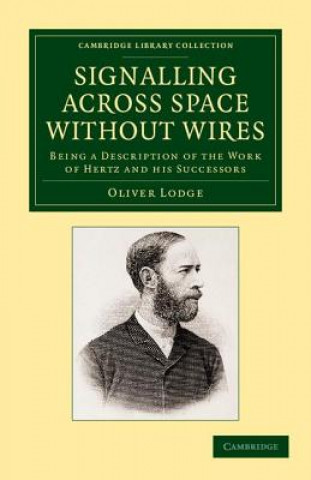
Signalling across Space without Wires
Being a Description of the Work of Hertz and his Successors
 Angielski
 77 b
77 b
Nawet do 30 dni na zwrot
Klienci kupili także

 /
/
 Miękka
 81.92
zł
81.92
zł





 /
Książka
222.25
zł
/
Książka
222.25
zł




 /
Miękka
73.94
zł
/
Miękka
73.94
zł








 /
Twarda
170.70
zł
/
Twarda
170.70
zł








The early 1890s saw the development of wireless telegraphy. Although the behaviour of radio waves had been predicted by James Clerk Maxwell, the production of a working coherer occupied some of the greatest practical physicists of the time. A giant in the field was Heinrich Hertz (1857–94), who was among the first to discover that radio waves could travel independently of wires. When Hertz died, his work was continued and soon led to the development of the first wireless radios. This book, published in 1900, is the third edition of Sir Oliver Lodge's popular explanation of Hertz's work. Including the Royal Institution lecture that Lodge (1851–1940) gave in 1894, along with detailed diagrams, it covers the basic principles of radio waves and some of the theory surrounding telegraphic technology. Also included in this reissue is Lodge's 1924 lecture on electrical precipitation, discussing the scintillating possibility of altering atmospheric conditions through the use of electrical charges.


Informacje o książce
Angielski
Kategoria

Podaruj tę książkę jeszcze dziś
To łatwe
1 Dodaj książkę do koszyka i wybierz „dostarczyć jako prezent” 2 W odpowiedzi wyślemy Ci bon 3 Książka dotrze na adres obdarowanegoMogłoby Cię także zainteresować

 /
Miękka
220.62
zł
/
Miękka
220.62
zł
 /
Twarda
597.54
zł
/
Twarda
597.54
zł







 /
Miękka
36.91
zł
/
Miękka
36.91
zł

 /
Miękka
71.90
zł
/
Miękka
71.90
zł






 /
Miękka
195.35
zł
/
Miękka
195.35
zł



Cześć! Jestem Libroamiko, Twój doradca książkowy.
Jak mogę Ci pomóc?