
 Kontakt
 Jak kupować
Dostawa
Doradca ds. zakupów
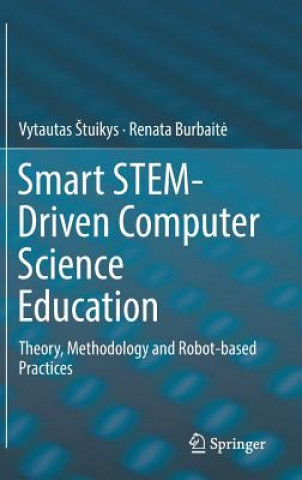
Smart STEM-Driven Computer Science Education
Theory, Methodology and Robot-based Practices
 Angielski
 249 b
249 b
30 dni na zwrot towaru
Klienci kupili także

 /
/
 Miękka
 125.25
zł
125.25
zł

 /
Miękka
226.32
zł
/
Miękka
226.32
zł




 /
Miękka
33.81
zł
/
Miękka
33.81
zł

At the centre of the methodology used in this book is STEM learning variability space that includes STEM pedagogical variability, learners' social variability, technological variability, CS content variability and interaction variability. To design smart components, firstly, the STEM learning variability space is defined for each component separately, and then model-driven approaches are applied. The theoretical basis includes feature-based modelling and model transformations at the top specification level and heterogeneous meta-programming techniques at the implementation level. Practice includes multiple case studies oriented for solving the task prototypes, taken from the real world, by educational robots. These case studies illustrate the process of gaining interdisciplinary knowledge pieces identified as S-knowledge, T-knowledge, E-knowledge, M-knowledge or integrated STEM knowledge and evaluate smart components from the pedagogical and technological perspectives based on data gathered from one real teaching setting. Smart STEM-Driven Computer Science Education: Theory, Methodology and Robot-based Practices outlines the overall capabilities of the proposed approach and also points out the drawbacks from the viewpoint of different actors, i.e. researchers, designers, teachers and learners.


Informacje o książce
Angielski
Kategoria

Podaruj tę książkę jeszcze dziś
To łatwe
1 Dodaj książkę do koszyka i wybierz „dostarczyć jako prezent” 2 W odpowiedzi wyślemy Ci bon 3 Książka dotrze na adres obdarowanegoMogłoby Cię także zainteresować











Cześć! Jestem Libroamiko, Twój doradca książkowy.
Jak mogę Ci pomóc?