
 Kontakt
 Jak kupować
Dostawa
Doradca ds. zakupów
 Angielski
 679 b
679 b
Nawet do 30 dni na zwrot
Klienci kupili także











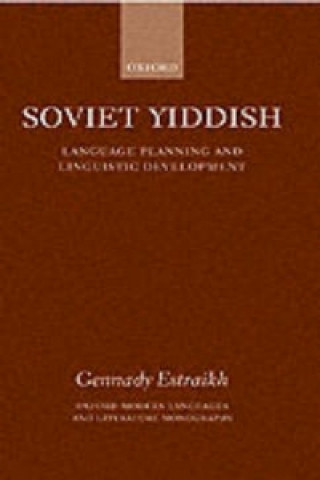
This is the first comprehensive study of Yiddish in the former Soviet Union. A chronicle of orthographic and other reforms from the state of the language in pre-Revolutionary Russia, through active language-planning in the 1920s and 1930s, repression, and subsequent developments up to the 1980sis recreated from contemporary publications and archival materials. Later chapters draw on the author's own experience as a Yiddish writer and lexicographer in Moscow. At a time when the Bolshevik party's Jewish sections held an influential position, Yiddish attained a functional diversity without precedent in its history; but underlying contradictions between ideas expressed in the slogans 'Proletarians of all countries, unite!' and 'The right of nations to self-determination' led to extremes in language-planning. A golden mean was achieved after the 1934 Yiddish language conference in Kiev. Using contemporary literary works as a source of linguistic and sociolinguistic information, Gennady Estraikh charts the development of the resultant variety of the language, 'Soviet Yiddish'; the effects of severe repression in the late 1930s and 1940s; and the subsequent decline in usage. Comparisons are drawn between Soviet Yiddish language-planning and concurrent reforms in Russian, Ukrainian, Belorussian, and German; and the features and types of Soviet Yiddish word-formation are analysed, notably univerbation, or compressing a phrase into one word.


Informacje o książce
Angielski
Kategoria

Podaruj tę książkę jeszcze dziś
To łatwe
1 Dodaj książkę do koszyka i wybierz „dostarczyć jako prezent” 2 W odpowiedzi wyślemy Ci bon 3 Książka dotrze na adres obdarowanegoMogłoby Cię także zainteresować





 /
/
 Miękka
 56.33
zł
56.33
zł









 /
Miękka
63.27
zł
/
Miękka
63.27
zł


Cześć! Jestem Libroamiko, Twój doradca książkowy.
Jak mogę Ci pomóc?