
 Kontakt
 Jak kupować

Dostawa
Doradca ds. zakupów
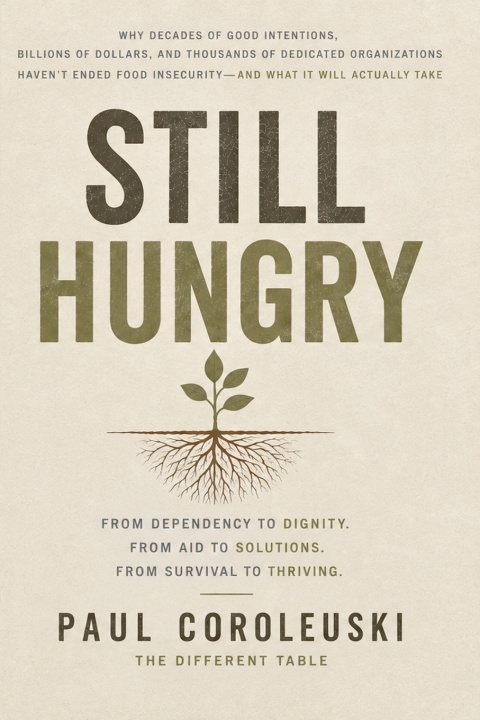
Still Hungry
Why Decades of Good Intentions, Billions of Dollars, and Thousands of Dedicated Organizations Haven't Ended Food Insecurity-And What It Will Actually Take
 Angielski
 42 b
 Zapowiedź
 Nowość
 Wydanie 01. 12. 2026
Nawet do 30 dni na zwrot

For nearly forty years, Paul Coroleuski fed people. He worked disaster zones in 24 countries, stood in the wreckage after the Haiti earthquake, Hurricane Katrina, and Hurricane Maria, and ran relief operations most people only glimpse on the evening news. Along the way he kept running into a question nobody in the sector wanted to ask out loud: if the hunger-relief system has this much money and this many good people, why are so many still hungry?
Still Hungry is his answer, and it isn't a comfortable one. Coroleuski names three failures that keep the problem alive. The Dignity Deficit is aid that fills stomachs but treats people as recipients instead of neighbors. The Profitability Paradox describes a nonprofit sector whose funding incentives quietly reward organizational survival over solved problems. The Silo Crisis is the turf-guarding that leaves real families behind, like the twenty households in post-Maria Puerto Rico who never got rebuilding help because two aid groups couldn't agree on whose territory it was.
This isn't criticism from a safe distance. Coroleuski writes about being told to pad a donor receipt, about a misleading donor tour he didn't stop, and about the undiagnosed PTSD and broken marriage that years of disaster work cost him. He owns his part in every failure he names.
Then he turns to what works: community-grown food, local enterprise, workforce pathways, and a practical hub-and-spoke model any community can adapt. The book closes with direct challenges to churches, nonprofit leaders, donors, corporations, and communities themselves.
Readers of When Helping Hurts and Toxic Charity will recognize the questions. What Still Hungry adds is the view from inside, from someone who spent a career in the system and still believes it can change. Success, he argues, isn't how many people an organization serves. It's how many no longer need it.


Informacje o książce
Angielski

Podaruj tę książkę jeszcze dziś
To łatwe
1 Dodaj książkę do koszyka i wybierz „dostarczyć jako prezent” 2 W odpowiedzi wyślemy Ci bon 3 Książka dotrze na adres obdarowanegoCześć! Jestem Libroamiko, Twój doradca książkowy.
Jak mogę Ci pomóc?