
 Kontakt
 Jak kupować
Dostawa
Doradca ds. zakupów
 Angielski
 174 b
174 b
Nawet do 30 dni na zwrot
Klienci kupili także




 /
/
 Miękka
 688.46
zł
688.46
zł




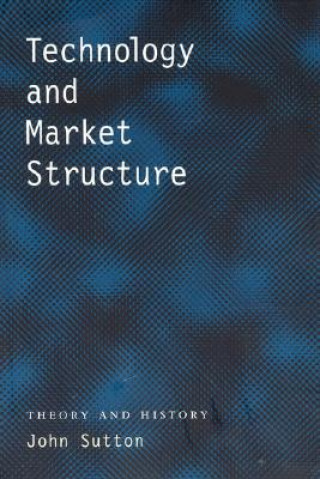
Traditionally, the field of industrial organization has relied on two unrelated theories--the cross-section theory and the growth-of-firms theory--to explain cross-industry differences in concentration and within-industry skewness. The two approaches are based on very different mathematical structures and few researchers have attempted to relate them to each other.In this book, John Sutton unifies the two approaches through a theory that rests on three simple principles. The first two, a "survivor principle" that says that firms will not pursue loss-making strategies, and an "arbitrage principle" that says that if a profitable opportunity is available, some firm will take it, suffice to define a set of possible outcomes. The third, the "symmetry principle," says that the strategy used by a new entrant into any submarket depends neither on the entrants identity nor on its history in other submarkets. This allows researchers to bring together the roles of strategic interactions and of independence effects. The result is that the considerations motivating the cross-section tradition and those motivating the growth-of-firms tradition both drop out within a single game-theoretic model.This book follows Sutton's Sunk Costs and Market Structure, published by MIT Press in 1991.


Informacje o książce
Angielski

Podaruj tę książkę jeszcze dziś
To łatwe
1 Dodaj książkę do koszyka i wybierz „dostarczyć jako prezent” 2 W odpowiedzi wyślemy Ci bon 3 Książka dotrze na adres obdarowanegoMogłoby Cię także zainteresować
 /
Twarda
188.22
zł
/
Twarda
188.22
zł













Cześć! Jestem Libroamiko, Twój doradca książkowy.
Jak mogę Ci pomóc?