
 Kontakt
 Jak kupować
Dostawa
Doradca ds. zakupów
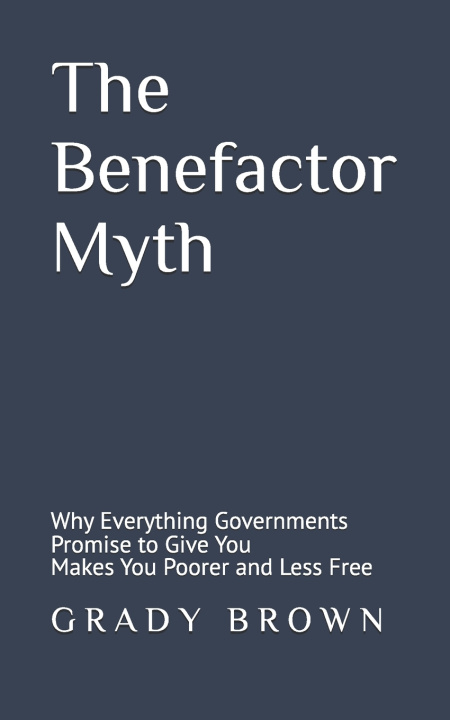
THE BENEFACTOR MYTH
Why Everything Governments Promise to Give You Makes You Poorer and Less Free
 Angielski
 46 b
46 b
 Nowość
najlepszej
ceny ▸
Nawet do 30 dni na zwrot

For more than a century, Western governments have promised that positive rights - to healthcare, housing, education, and income - represent the natural extension of human freedom. Grady Brown argues they represent its replacement.
In The Benefactor Myth, Brown traces how the welfare state's most durable programs systematically fail the people they claim to help - not through corruption or indifference, but through structural features that are both predictable and persistently ignored. Drawing on public choice theory, Hayek's knowledge problem, and a century of program evidence, Brown documents how administrative bureaucracies develop interests independent of their beneficiaries, how regulatory capture redirects resources toward the organized at the expense of the needy, and how the dependency trap erodes the agency of the very people the programs were built to serve.
But this is not a book about what government should stop doing. It is a book about what genuinely works - the historical cases, the economic mechanisms, and the institutional designs that have produced the most dramatic improvements in human welfare in recorded history, largely without a coordinator and certainly without a rights declaration.
Rigorous, accessible, and deliberately provocative, The Benefactor Myth makes the case that the most compassionate politics is the one that trusts people most - and that building it requires understanding, honestly and without shortcuts, why the alternative has so consistently failed them.
"The welfare state does not fail to help the poor because it is underfunded. It fails to help the poorest poor because the poorest poor are not the constituency that determines whether the programs survive."


Informacje o książce
Angielski

Podaruj tę książkę jeszcze dziś
To łatwe
1 Dodaj książkę do koszyka i wybierz „dostarczyć jako prezent” 2 W odpowiedzi wyślemy Ci bon 3 Książka dotrze na adres obdarowanegoCześć! Jestem Libroamiko, Twój doradca książkowy.
Jak mogę Ci pomóc?