
 Kontakt
 Jak kupować

Dostawa
Doradca ds. zakupów
The Comfort Paradox
Why Extreme Comfort Is Weakening Our Biological Resilience
 Hiszpański
 26 b
 Zapowiedź
 Nowość
Nawet do 30 dni na zwrot

We have never lived more comfortably. So why don't we feel better?
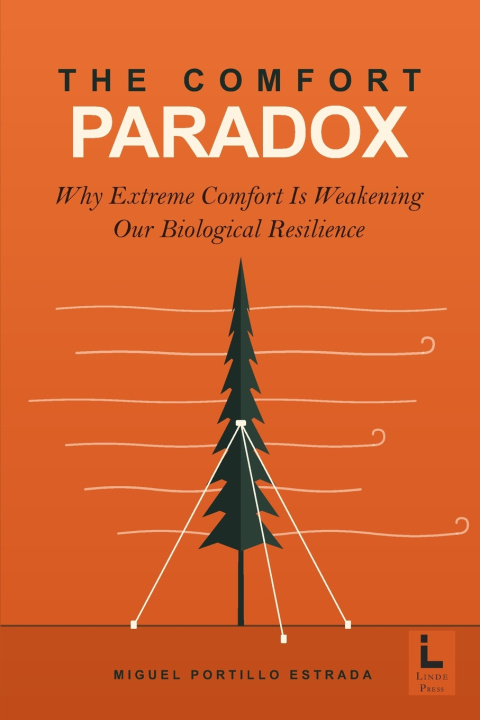
A pine tree held in place by guy wires, never swayed by the wind, grows taller and more slender than its neighbors. It also grows more fragile: it never builds the trunk the wind would have forced it to build. Plants have known this for millions of years. Humans are only beginning to learn it.
The Comfort Paradox explores how the systematic removal of the natural stressors our biology is built for is weakening our physical and psychological resilience. Modern comfort has shielded us from age-old dangers and lengthened our lives. But the simultaneous, continuous suppression of temperature variation, physical effort, intermittent scarcity and microbial diversity has opened up a deep evolutionary mismatch.
The book begins with hormesis, seen in plants and humans alike: certain stressors, in moderate doses, switch on the body's repair and defense systems. It then shows how modern life has thrown key mechanisms out of tune. An alarm system built for brief dangers fires endlessly at abstract threats. Dopamine is devalued by instant rewards that demand no effort. The body loses the physical load that keeps it vital. And the tribe dissolves into a digital hyperconnection without the physical presence that regulates us.
On the psychological side, the author argues that a life free of all adversity does not protect mental health but makes it fragile. Just as the immune system needs microbes to calibrate itself, the mind needs to face manageable difficulties to become resilient. And once survival is guaranteed, the disappearance of meaningful challenges leaves a void that is hard to fill.
This is not a self-help book, nor a case against civilization. It separates what is proven from what is speculative at every step, and devotes a full chapter to defending the comfort that saves lives and to dismantling the myths of the discomfort movement itself: the Blue Zones, ice baths and the idea that all physical effort is healthy. Its proposal is to reintroduce the right amount of friction voluntarily, guided by four principles, dose, intermittency, recovery and progression, and one condition that runs through them all: the challenge must be chosen.
Written by a biologist with a PhD in plant ecophysiology and backed by more than 150 scientific references, The Comfort Paradox argues that well-being lies not in the absence of stress but in the body's capacity to respond to it. An engaging, rigorous read for anyone who suspects that a little friction, in the right dose, is exactly what their life is missing.


Informacje o książce
Hiszpański

Podaruj tę książkę jeszcze dziś
To łatwe
1 Dodaj książkę do koszyka i wybierz „dostarczyć jako prezent” 2 W odpowiedzi wyślemy Ci bon 3 Książka dotrze na adres obdarowanegoCześć! Jestem Libroamiko, Twój doradca książkowy.
Jak mogę Ci pomóc?