
 Kontakt
 Jak kupować
Dostawa
Doradca ds. zakupów
 Angielski
 69 b
69 b
 Nowość
najlepszej
ceny ▸
Nawet do 30 dni na zwrot

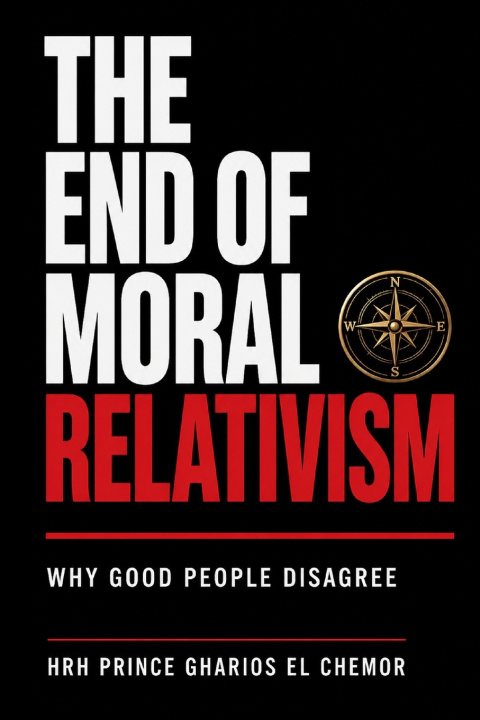
Are morals relative, or are they objectively true? Why do intelligent, honest, and compassionate people reach completely opposite moral conclusions while looking at the same facts?
In The End of Moral Relativism: Why Good People Disagree, philosopher and researcher HRH Prince Gharios El Chemor presents a groundbreaking new approach to one of philosophy's oldest debates.
Instead of defending either moral realism or moral relativism, this book argues that both positions overlook a deeper distinction: objective reality and ethical judgment are not the same thing.
Introducing the theory of Ethical Inevitable Reference (EIR), the book demonstrates how every person evaluates objective facts through unavoidable interpretive frameworks shaped by culture, education, psychology, history, and lived experience. The result is a powerful explanation for why moral disagreement is inevitable without requiring truth itself to become relative.
Blending philosophy with psychology, cognitive science, epistemology, anthropology, legal theory, and complexity science, this book explores:
- Moral realism vs. moral relativism
- Ethics and objective truth
- Philosophy of morality
- Metaethics and moral psychology
- Cognitive bias and ethical reasoning
- The science of moral disagreement
- Political and religious polarization
- AI ethics and moral decision-making
- Critical thinking and philosophy
- Structural ethics and institutional analysis
Accessible to general readers while grounded in serious philosophical scholarship, The End of Moral Relativism offers a compelling new framework for understanding morality in an increasingly polarized world.
If you enjoy books by Jonathan Haidt, Steven Pinker, Peter Singer, Michael Sandel, Yuval Noah Harari, or Thomas Sowell, this book offers a fresh perspective on why good people disagree-and why objective reality still matters.


Informacje o książce
Angielski

Podaruj tę książkę jeszcze dziś
To łatwe
1 Dodaj książkę do koszyka i wybierz „dostarczyć jako prezent” 2 W odpowiedzi wyślemy Ci bon 3 Książka dotrze na adres obdarowanegoCześć! Jestem Libroamiko, Twój doradca książkowy.
Jak mogę Ci pomóc?