
 Kontakt
 Jak kupować
Dostawa
Doradca ds. zakupów
 Angielski
 32 b
32 b
 Nowość
najlepszej
ceny ▸
Nawet do 30 dni na zwrot

What happens when the job you were grateful to have becomes the place where you slowly lose confidence in yourself?
You worked hard. You cared about the outcome. You accepted responsibility, solved problems, supported others, and kept going when the organization was under pressure.
Then something began to change.
Meetings felt heavier. Conversations became narrower. Responsibility increased, but authority did not. Speaking honestly began to carry consequences. Silence became adaptive. Overextension looked like loyalty, endurance looked like professionalism, and self-doubt gradually replaced clarity.
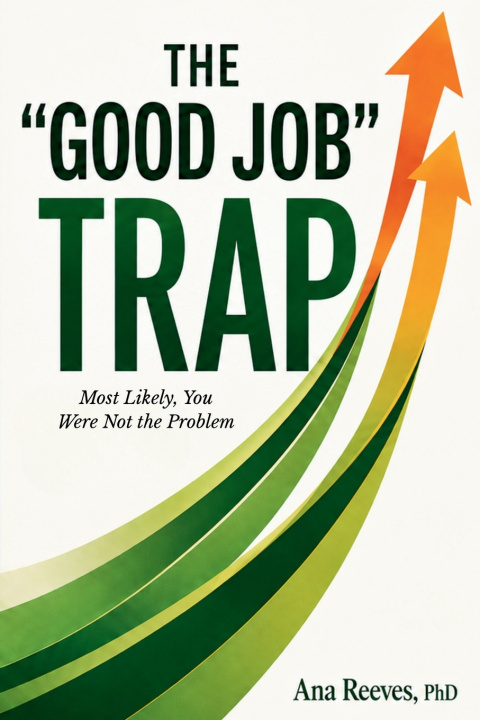
In The "Good Job" Trap, a scientist trained in experimental research examines why capable, committed people often blame themselves for pressures that originate in the systems around them.
Drawing on lived experience and peer-reviewed research in psychology, neuroscience, and organizational behaviour, this book explores how workplaces, particularly during periods of rapid growth, leadership transition, instability, or sustained pressure, can erode psychological safety, contribute to burnout, and quietly reshape behaviour, perception, and judgment.
This book examines:
• How responsibility and authority gradually drift apart
• Why psychological safety erodes under unmanaged pressure
• How employee voice narrows in high-urgency cultures
• Why dependable, high-performing people often carry the greatest strain
• Why silence can become a rational form of self-protection
• How organizational dysfunction becomes internalized as personal failure
For leaders and HR professionals, the book raises a parallel question:
What structures unintentionally reward overextension, discourage dissent, or confuse pressure with performance?
This is not a story about organizations being inherently bad or employees being inherently fragile. It is an examination of how ordinary decisions, repeated over time, can create environments in which people carry more, say less, and slowly lose trust in their own perceptions.
Culture is not decoration. It is infrastructure.
When that infrastructure weakens, the consequences are often carried first by the people most committed to keeping the organization functioning.
The "Good Job" Trap is for professionals who:
• Feel depleted by cultures that reward constant output
• Sense that something is wrong long before others can see it
• Have learned to stay silent because speaking no longer feels safe
• Were once confident in their judgment but have begun to doubt it
• Want to understand what they were responding to and why
It is also for leaders willing to examine how organizational design influences trust, morale, employee health, judgment, and long-term performance.
This is not a guide to becoming tougher or a manifesto against leadership. It is an invitation to examine the system before blaming the person, to name the patterns that pressure can conceal, and to reconsider where responsibility truly belongs.
Because sometimes the problem was not that you cared too little, worked too slowly, or failed to adapt.
Sometimes you adapted for too long.
Maybe you were never the problem.


Informacje o książce
Angielski
