
 Kontakt
 Jak kupować
Dostawa
Doradca ds. zakupów
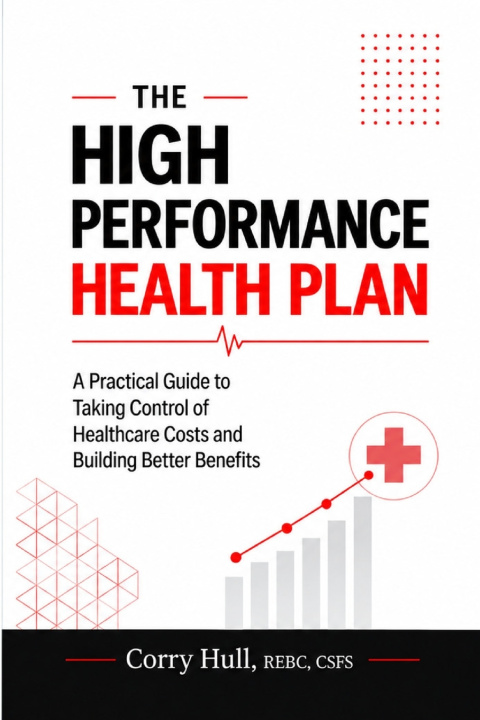
The High Performance Health Plan
A Practical Guide to Taking Control of Healthcare Costs and Building Better Benefits
 Angielski
 33 b
33 b
 Nowość
Nawet do 30 dni na zwrot

Healthcare is one of the largest expenses on an employer's P&L-and one of the few where the buyer often has little idea what they are actually paying for.
The High-Performance Health Plan: A Practical Guide to Taking Control of Healthcare Costs and Building Better Benefits is written for CEOs, CFOs, HR leaders, benefits professionals, and employers who are tired of treating the annual insurance renewal as their healthcare strategy.
Drawing on nearly two decades of experience in employee benefits consulting, Corry Hull explains how the U.S. healthcare and insurance system actually works, where the money goes, why incentives are often misaligned, and why simply changing carriers, raising deductibles, or shifting more cost to employees rarely fixes the underlying problem.
The book starts with a simple premise: benefits are compensation. Every dollar unnecessarily consumed by healthcare is a dollar that cannot be used for wages, retirement benefits, recruiting, investment, or other priorities.
From there, Hull walks employers through fully insured, level-funded, and self-funded health plans and explains the building blocks they need to understand, including claims, reserves, stop-loss, captives, TPAs, PBMs, provider networks, pharmacy contracts, data ownership, vendor incentives, and contract language.
Readers will also learn how employers can use tools such as healthcare price transparency, site-of-care strategies, specialty pharmacy management, direct primary care, Centers of Excellence, navigation, high-cost claimant management, payment integrity, employee incentives, and other cost-containment strategies to reduce waste without sacrificing quality.
Just as importantly, the book explains how to put those pieces together without overwhelming employees. Using a practical Crawl, Walk, Run, Sprint approach, employers can build control over time, fix the obvious waste first, and add more advanced strategies only when the organization is ready.
The goal is not to build the cheapest health plan.
It is to build a plan that controls unnecessary spending, protects employees, improves access to high-quality care, gives leadership better information, and turns employee benefits back into the competitive advantage they were intended to be.
Employers do not have to fix American healthcare. They simply have to become better buyers of the healthcare they are already paying for.


Informacje o książce
Angielski

Podaruj tę książkę jeszcze dziś
To łatwe
1 Dodaj książkę do koszyka i wybierz „dostarczyć jako prezent” 2 W odpowiedzi wyślemy Ci bon 3 Książka dotrze na adres obdarowanegoCześć! Jestem Libroamiko, Twój doradca książkowy.
Jak mogę Ci pomóc?