
 Kontakt
 Jak kupować
Dostawa
Doradca ds. zakupów
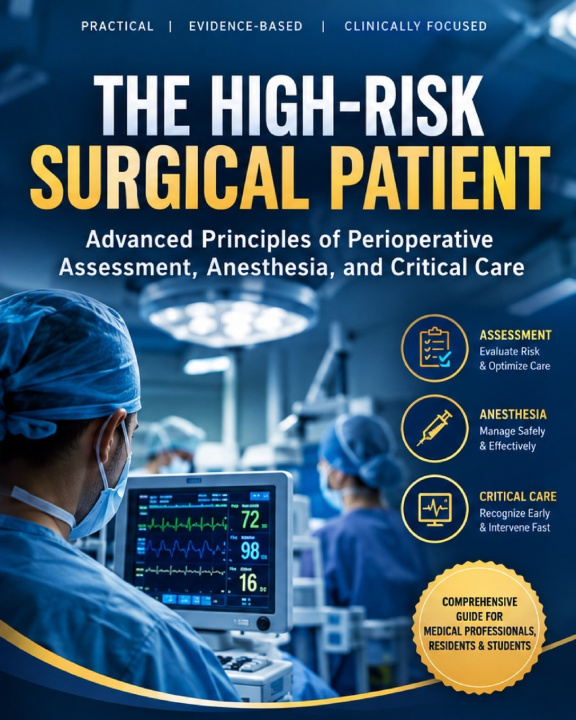
THE HIGH-RISK SURGICAL PATIENT
Advanced Principles of Perioperative Assessment, Anesthesia, and Critical Care
 Angielski
 138 b
138 b
 Nowość
najlepszej
ceny ▸
Nawet do 30 dni na zwrot

The High-Risk Surgical Patient is an advanced clinical reference for understanding, assessing, and managing patients whose limited physiologic reserve, comorbid disease, surgical stress, or anesthetic vulnerability can make perioperative care especially complex.
High-risk surgery is rarely about a single diagnosis. The real challenge lies in understanding how cardiovascular, respiratory, renal, metabolic, neurologic, hematologic, and other physiologic vulnerabilities interact with the demands of surgery and anesthesia. This book develops a structured approach to recognizing those interactions before they become emergencies.
Beginning with the foundations of high-risk perioperative assessment, the book explores preoperative evaluation, risk stratification, functional capacity, frailty, physiologic reserve, comorbidity burden, airway assessment, cardiovascular risk, pulmonary disease, renal and metabolic dysfunction, medication management, and the difficult decision of when to optimize versus when to proceed with surgery.
The discussion then expands into major high-risk conditions and clinical situations, including ischemic heart disease, previous myocardial infarction, heart failure, valvular disease, arrhythmias, pulmonary hypertension, cardiomyopathies, COPD, asthma, obstructive sleep apnea, obesity, difficult airway, mechanical ventilation, chronic kidney disease, acute kidney injury, dialysis, liver disease, diabetes, neurologic disease, stroke, seizure disorders, anemia, coagulopathy, anticoagulation, immunocompromise, trauma, critical illness, emergency surgery, cancer, and complex multisystem disease.
Special attention is given to high-risk populations, including pregnant patients, frail patients, critically ill surgical patients, and patients with multiple interacting comorbidities. The book emphasizes the importance of understanding not only what disease is present, but what physiologic consequence that disease creates when the patient is exposed to anesthesia and surgical stress.
The final sections move into time-critical perioperative deterioration and emergency management, covering hypotension, hypoxemia, hypercapnia, difficult ventilation, major hemorrhage, massive transfusion, perioperative anaphylaxis, malignant hyperthermia, local anesthetic systemic toxicity, cardiac arrest, acute kidney injury, severe metabolic emergencies, unexpected intraoperative deterioration, and delayed emergence.
Throughout the book, complex concepts are organized through clinical frameworks, risk-stratification approaches, checklists, decision pathways, clinical pearls, common errors, integrated cases, and practical reasoning sequences. The goal is not simply to provide more information, but to help readers recognize patterns, anticipate deterioration, prepare for complications, and approach difficult perioperative decisions systematically.
The High-Risk Surgical Patient is intended as an educational reference for clinicians and trainees seeking a broad, structured understanding of perioperative assessment, anesthesia considerations, critical care, and the management of medically complex surgical patients.
Important: This book is an educational reference and is not a substitute for individualized clinical assessment, professional training, supervision, current guidelines, institutional protocols, or consultation with qualified healthcare professionals.


Informacje o książce
Angielski

Podaruj tę książkę jeszcze dziś
To łatwe
1 Dodaj książkę do koszyka i wybierz „dostarczyć jako prezent” 2 W odpowiedzi wyślemy Ci bon 3 Książka dotrze na adres obdarowanegoCześć! Jestem Libroamiko, Twój doradca książkowy.
Jak mogę Ci pomóc?