
 Kontakt
 Jak kupować
Dostawa
Doradca ds. zakupów
 Angielski
 32 b
32 b
 Nowość
najlepszej
ceny ▸
Nawet do 30 dni na zwrot

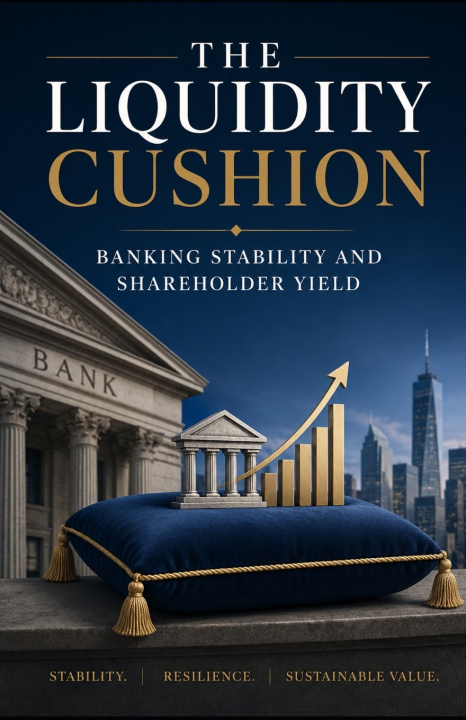
The Liquidity Cushion: Banking Stability and Shareholder Yield explores the critical relationship between financial resilience and shareholder value in the modern banking industry. The book demonstrates that liquidity is far more than a regulatory requirement or operational necessity-it is a strategic asset that protects institutions during periods of uncertainty, preserves confidence, and supports long-term success. Through an examination of banking history, financial crises, liquidity management frameworks, and regulatory developments, the book shows how the ability to access cash and stable funding can determine whether a bank survives or fails. From the Great Depression and the 2008 Global Financial Crisis to Silicon Valley Bank's collapse, the lessons are consistent: confidence and liquidity are inseparable foundations of banking stability.
The book also examines shareholder yield as a comprehensive measure of value creation, encompassing dividends, share repurchases, and capital allocation decisions. It explains how management teams must continuously balance the competing objectives of rewarding shareholders and maintaining sufficient capital and liquidity buffers. Sustainable shareholder returns do not come from maximizing short-term distributions but from disciplined capital allocation, strong risk management, effective governance, and consistent profitability. By analyzing the trade-offs between liquidity and profitability, the role of stress testing, regulatory frameworks such as Basel III, and the importance of capital planning, the book highlights how resilient institutions are often best positioned to deliver superior long-term returns.
Finally, the book looks toward the future of banking, exploring how technology, digital banking, artificial intelligence, cybersecurity, climate risk, geopolitical uncertainty, and changing customer behavior are reshaping the financial landscape. While innovation creates new opportunities, it also introduces new forms of risk and accelerates the speed at which liquidity pressures can emerge. The central conclusion is that the most successful banks will be those that combine innovation with prudence, profitability with resilience, and growth with disciplined risk management. Sustainable shareholder value and banking stability are not competing goals; they are interconnected outcomes of strong leadership, effective liquidity management, and the ability to maintain trust in an increasingly complex financial world.


Informacje o książce
Angielski

Podaruj tę książkę jeszcze dziś
To łatwe
1 Dodaj książkę do koszyka i wybierz „dostarczyć jako prezent” 2 W odpowiedzi wyślemy Ci bon 3 Książka dotrze na adres obdarowanegoCześć! Jestem Libroamiko, Twój doradca książkowy.
Jak mogę Ci pomóc?