
 Kontakt
 Jak kupować
Dostawa
Doradca ds. zakupów
 Angielski
 42 b
42 b
 Zapowiedź
 Nowość
najlepszej
ceny ▸
 Termin nieznany
Nawet do 30 dni na zwrot

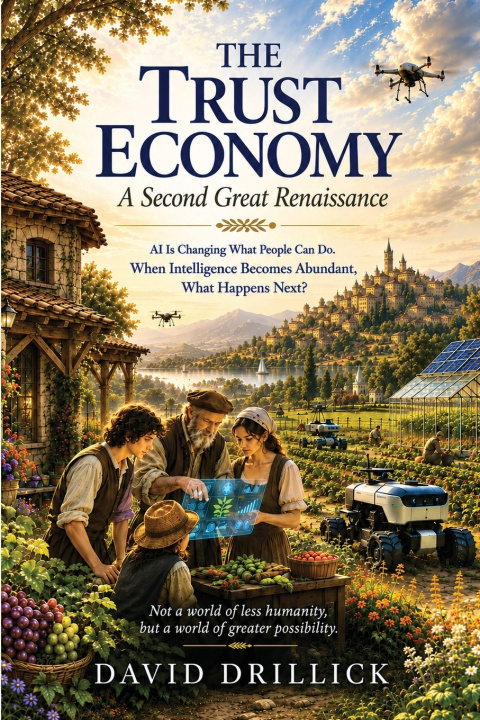
A thought experiment for business leaders about what AI may make possible.
Artificial intelligence is changing what ordinary people can do. What happens next?
It begins with something surprisingly ordinary: shopping.
Give a customer an AI capable of researching products, comparing alternatives, questioning claims, examining reviews, and serving as a personal purchasing adviser. Suddenly, an individual enters the marketplace with capabilities that once required considerable time, expertise, or an organization behind them.
That seems like a small change.
But follow the ripples.
What happens to advertising when customers can check what they're told? What happens to sales when buyers arrive better informed? What happens to customer service when conversations become a source of organizational intelligence? What happens to reputation when claims are easier to verify?
And keep going.
What happens to management, employment, organizational structure, software, competition, markets, and the balance of capability between individuals and institutions?
The Trust Economy: A Second Great Renaissance follows those breadcrumbs.
It does not begin with a grand prediction about where artificial intelligence will take civilization. Instead, it begins with changes already appearing around us and asks:
If this happens, what might happen next?
Through practical examples, historical parallels, and the story of a fictional company, David Drillick follows those consequences outward. Along the way, the exploration produces new ideas-including the Personal Genie, Attention System, 2-2-2 Causal Reasoning Framework, Smartware, AIFIS, and IRIS-for thinking about a world in which intelligent assistance becomes inexpensive and widely available.
But following the ripples reveals something more important.
There is no single inevitable AI future.
Technology gives us capabilities. What we build with them depends upon human choices: the systems we design, the incentives we create, the authority we surrender or retain, and the institutions we construct.
Some paths could produce societies that are more centralized, manipulative, less private, and less free. AI could amplify surveillance, deception, bureaucracy, concentration of power, and control just as readily as it amplifies individual capability.
Other choices could lead somewhere very different.
AI could amplify the individual. It could help people understand complicated choices, challenge questionable claims, recognize manipulation, navigate institutions, and make scarce expertise widely available. Businesses could hear customers better. Small enterprises could gain capabilities once available only to large ones.
And then, late in the exploration, another possibility becomes visible.
The Trust Economy.
Follow that possibility farther, and something larger appears: another extraordinary period of human creativity, enterprise, discovery, craftsmanship, and flourishing.
A Second Great Renaissance.
Not a prediction. Not an inevitability.
A possibility.
The Trust Economy is ultimately a book about the choices we make as these new capabilities arrive-and about one remarkable future we may discover is within our power to build.


Informacje o książce
Angielski

Podaruj tę książkę jeszcze dziś
To łatwe
1 Dodaj książkę do koszyka i wybierz „dostarczyć jako prezent” 2 W odpowiedzi wyślemy Ci bon 3 Książka dotrze na adres obdarowanegoCześć! Jestem Libroamiko, Twój doradca książkowy.
Jak mogę Ci pomóc?