
 Kontakt
 Jak kupować
Dostawa
Doradca ds. zakupów
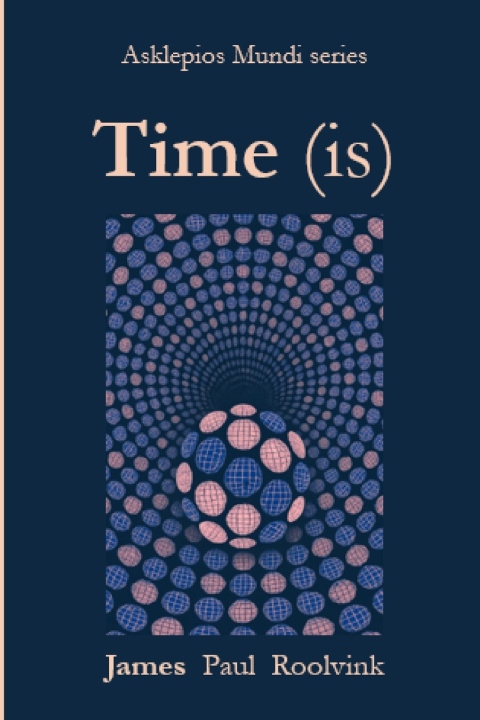
Time (is)
On the real temporary relation of Time and Being from within McTaggart's 'The unreality of time'
 Angielski
 43 b
43 b
 Zapowiedź
 Nowość
Nawet do 30 dni na zwrot

'Time (is)' describes what essentially insubstantial time is. Through time, pre-existent transcendent personalities can relate to themselves. Through time, you are a (self). What sort of self, or being, you are depends on how time opens up your personality as this or that being. Time belongs to your being, but not because of your being. Time belongs to you, but not because of you. Time is bestowed upon you.
Descartes knew this and said that he could think and know with certainty that he existed as a thinking being, as long as time was bestowed upon him, given to him. God gave him time, but how could he have thought only in such vague terms of the 'purposeful causality' he so detested? For him, time is even more of a 'given' than God's gift of the idea of God within the non-∞ idea of the ∞.
Heidegger (in 'Being and time' (1927)) saw that time is part of yourself, your being, and does not exist outside yourself, whilst your time - and thus yourself - is nevertheless given (to yourself) and you cannot fully control your time - if only because you must do 'something' (just or sacred) with it. Time is not given because you yourself are already temporal, and yet, at the same time, time is indeed given to you and is more than yourself.
In 'Time (is)', the gift of time is indeed conceived, and specifically as the gift of yourself to yourself, in which you can also give yourself to yourself, and this is through the transcendent God. This is because terms such as the individual self, personality, life force, ego, living soul, etc., are not lumped together with the self. By making these fundamental distinctions within the self, clarity can emerge.
To gain clarity about the time that has been given to you-which you must not squander-'Time (is)' begins with a translation, explanation and commentary on McTaggart's 1908 article 'The Unreality of Time'. In it, he distinguishes between an A-time series (past, present and future) and a B-time series (earlier and later). How are these time series related to one another? Can they be translated into one another? Which is earlier/more essential, and which is later? Is this 'earlier-later' a sequence of events that reflects a non-temporal order? Building on that article, a necessary toolkit of concepts (precisely in the form of clearly formulated questions) is developed to conceptualise the relationship between time, eternity and transcendence, and to answer the question 'What is time?'.
These concepts include, amongst others, a conceptualised understanding of logic as '= = =' ('that which is, is') and an understanding of the eminent essence of logic, the logos (which is more logical than logic itself), as an understanding of the immediate insight into '≠ = ≠' ('nothing is nothing') and '= ≠ is' ('logic ≠ logos'), the flip side of the immediate insight into being. Time, and indeed the temporal self, which can be granted eternity within time by the transcendent God, are not logical and must be conceived from the perspective of the logos. A message that AI enthusiasts, who believe that a self can be constructed using logically consistent rules, might do well to take to heart.
In this development of concepts, the voices of Parmenides, Heraclitus, the Aristotelian Thomas of Aquinas and the Neoplatonists Pseudo-Dionysius and Proclus, Ibn Arabi and William Blake resonate. This reinforces the conclusion that time must be conceived as historical development. With these concepts, it is possible to conceive of the gift and, with it, the 'existential' meaning of life, in which one experiences that it is Good to exist, that evil, suffering and falsehood exist, and that experiencing one's own existence is still better than never having existed at all.
'Time (is)' ends with an analysis of a number of time travel movies. This book is translated


Informacje o książce
Angielski

Podaruj tę książkę jeszcze dziś
To łatwe
1 Dodaj książkę do koszyka i wybierz „dostarczyć jako prezent” 2 W odpowiedzi wyślemy Ci bon 3 Książka dotrze na adres obdarowanegoCześć! Jestem Libroamiko, Twój doradca książkowy.
Jak mogę Ci pomóc?